


How Transparent and Ethical Is Your Nonprofit Fundraising Platform in 2026?
When did you last look at your own donation page the way a donor does?
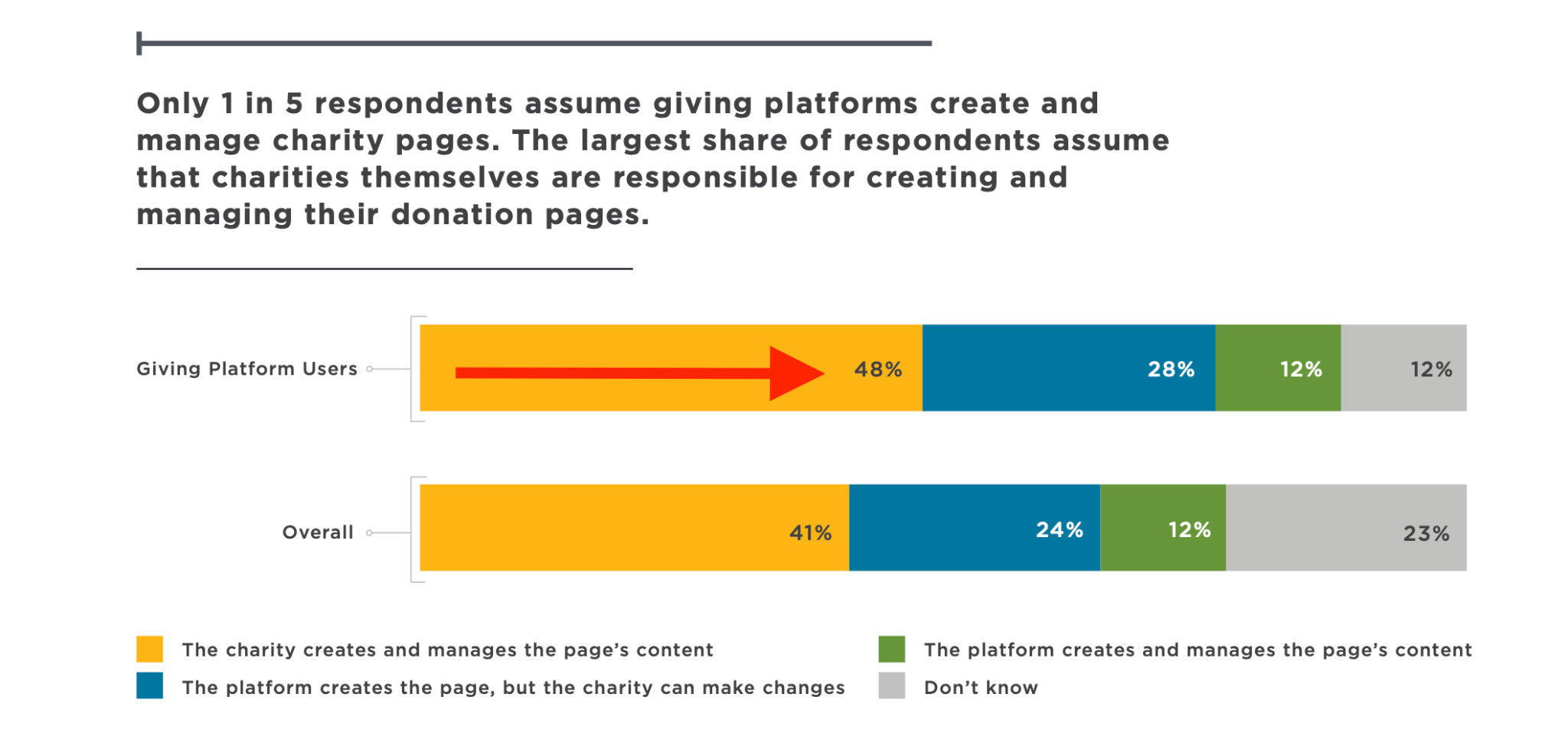
Our research found that, according to Give.org, 48% of platform users assume the charity created and manages the donation page they are using.
(1)
That assumption can shape how donors view anything unexpected at checkout. And two fundraising platforms are currently drawing attention for different reasons:
- Givebutter over lawsuits alleging that extra charges appeared before supporters confirmed their gifts, without their affirmative consent or a clear way to remove them.
- Zeffy over user reports about preselected contributions that were difficult to decline.
For gala organizers, both situations raise a practical question about what your supporters can see, understand, and opt out of before confirming a payment.
Let’s look at this in more detail for you.
Givebutter and Zeffy: What the Scrutiny Is About
Givebutter and Zeffy have become big names in nonprofit fundraising. Between them, they say they have helped nonprofits raise more than $12 billion.
So what, exactly, do the Givebutter plaintiffs and Zeffy users say happened?
Givebutter’s lawsuits over alleged checkout practices
Your donation page is a bit like the front desk at a gala. Supporters may know another company supplies the software, but they still associate the experience with you.
And if someone spots an unexpected charge, your team may be the one taking the heat. That's why the two proposed class actions filed against Givebutter in 2026 are worth watching.
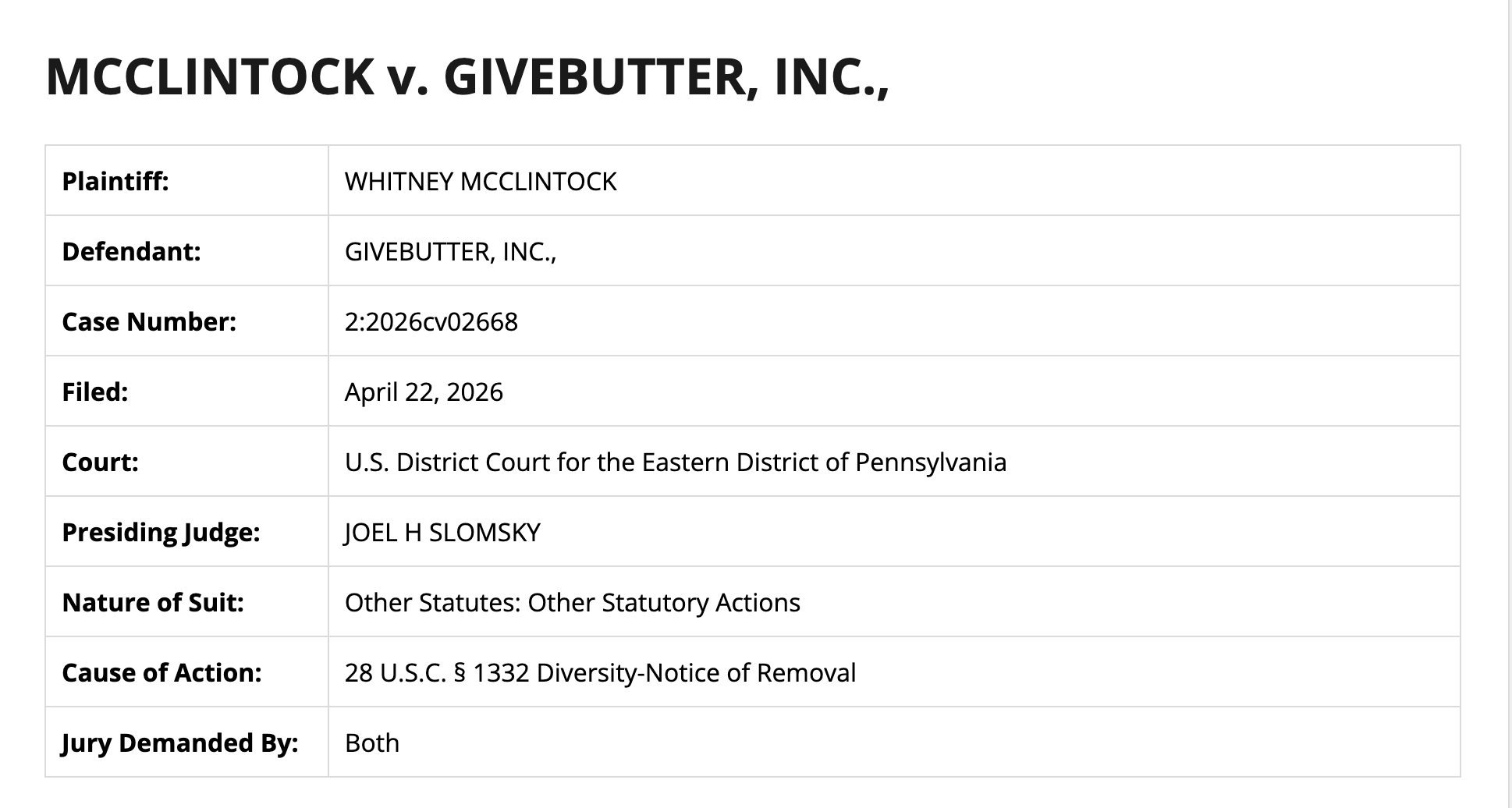
McClintock v. Givebutter, Inc.
(2)
The first proposed class action began in Pennsylvania state court before Givebutter moved it into federal court.
According to the complaint:
- Whitney McClintock donated $20 to Ann’s Heart on December 19, 2023
- Givebutter allegedly added a $0.91 processing fee and a $3 tip, bringing her total charge to $23.91.
- McClintock alleges that she did not know either charge had been added or could be removed.
- Her complaint goes on to say she would not have paid the extra $3.91 had she known the charges were optional.
Where does the case stand now?
As of October 2026, it remains pending, and the federal court has not ruled on McClintock’s allegations.
Summeril et al. v. Givebutter, Inc.

(3)
Filed on August 4, 2026, in the Southern District of California, this second lawsuit focuses on what donors allegedly saw, and did not see, before completing payments.
When we looked at the complaint, we saw that donors allegedly encountered three problems:
- Processing fees appeared before donors actively agreed to cover them.
- Tips were allegedly preselected rather than chosen by the donor.
- Removing those charges could require finding less obvious controls or repeatedly reducing a tip to zero.
As of October 2026, the Summeril case also remains pending, and the court has not ruled on the plaintiffs’ allegations.
How Givebutter describes its model:
According to Givebutter’s general product guidance, its tips are optional and nonprofits can choose whether to use the tip-enabled model.
Under that setup, it says nonprofits receive the intended donation without paying platform or processing costs on eligible transactions, while tips help cover Givebutter’s costs.
For you then, it’s worth keeping this in mind:
Ask yourself; when a supporter reaches the final total, do they have a choice? And can they tell at a glance what they are paying, why they are paying it, and how to say no?
Related Read:
See our guide to how Givebutter’s tipping model works, what donors may pay, and how its fees compare with PayBee.
Zeffy’s Donor-Contribution Model and User Concerns
Zeffy’s pitch to nonprofits is hard to argue with:
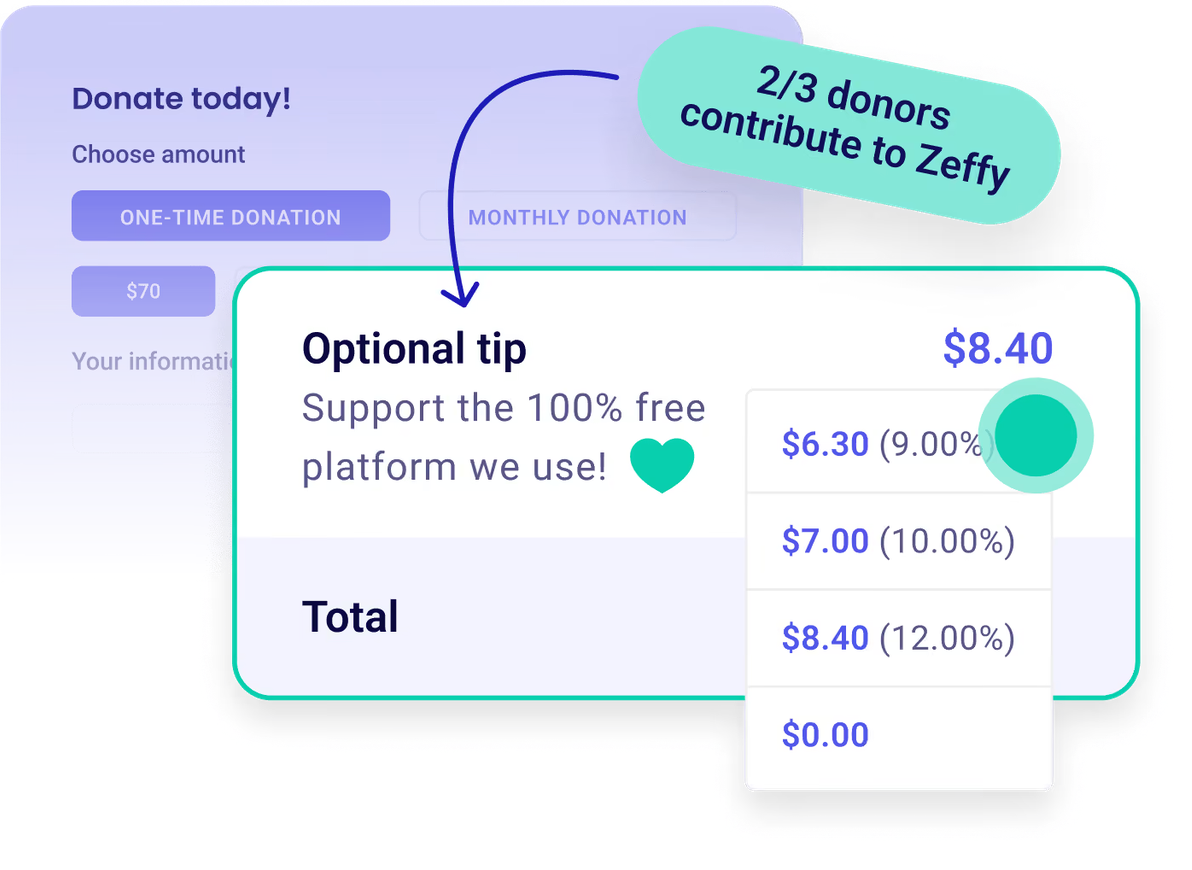
Your organization pays no platform or processing fees because Zeffy asks donors to help cover the cost instead, through an optional contribution at checkout.
And plenty of donors do say yes. Zeffy says around two out of three contribute, helping it support 100,000 organizations globally without charging them.
(4)
But there’s a bit of a snag in that pitch, with some donors saying they didn’t realize what they were agreeing to.
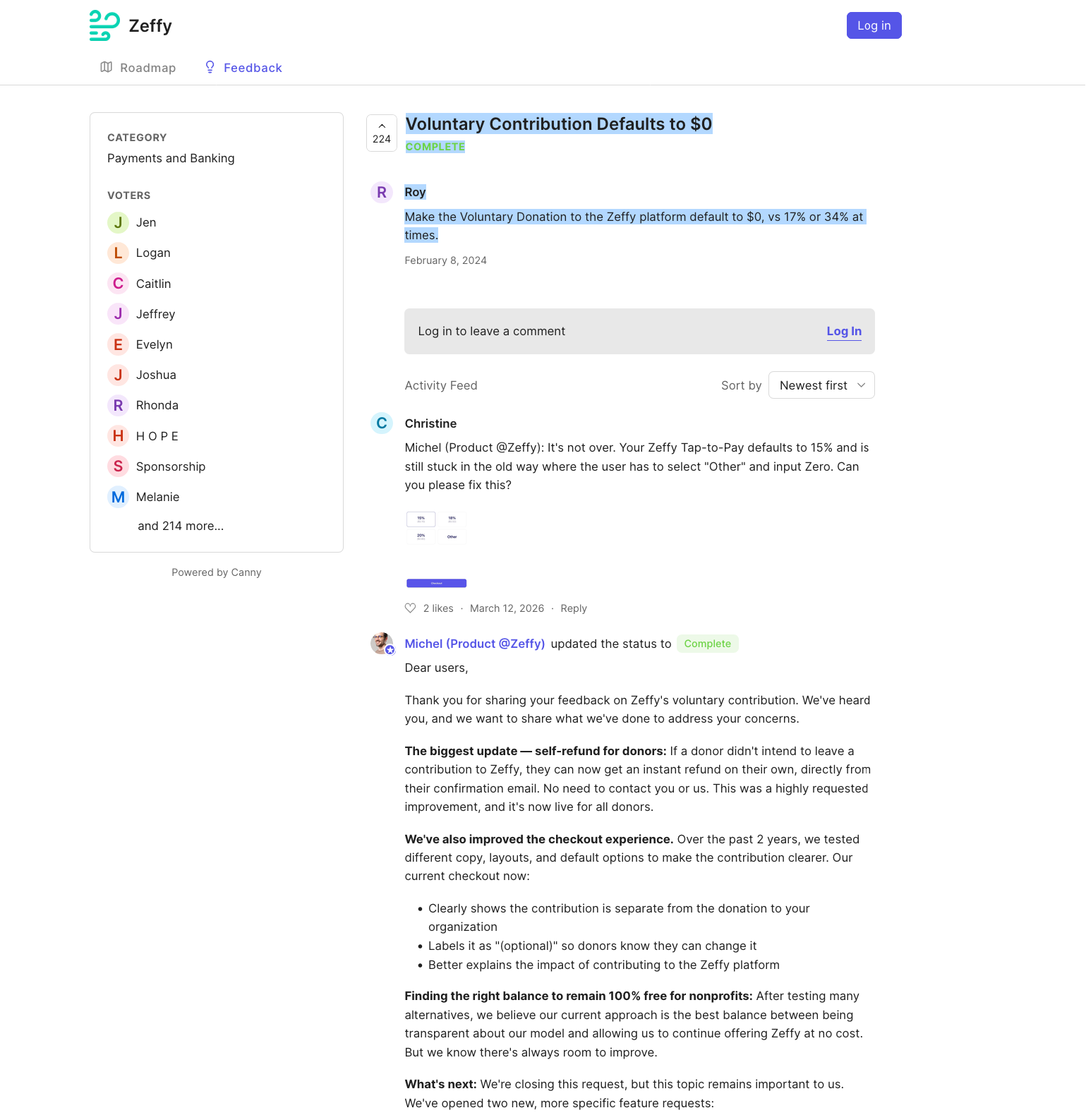
Users on Zeffy's own feedback board reported:
- Contributions were already selected before they had a chance to choose
- No visible $0 option to decline
- Supporters going back to the nonprofit after paying more than they meant to
(5)
Of course, these are individual complaints, and Zeffy's checkout can look different depending on where and how someone pays. Meaning we can't assume every donor has had the same experience.
To its credit, Zeffy has listened to some of the criticism. On March 11, 2026, it said it had made optional contributions clearer and added a way for donors to request refunds through their confirmation emails, without having to involve your nonprofit.
That should save your team a few awkward conversations. But the change some users really wanted - making $0 the default - never happened, and Zeffy closed the feedback request.
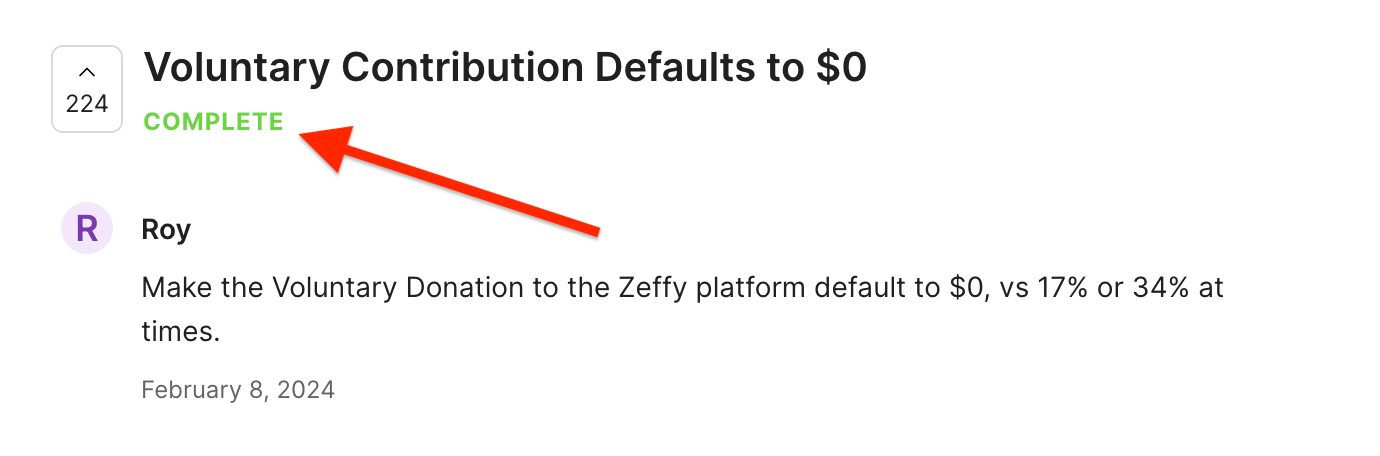
So donors still have to remove the suggested contribution themselves if they don't want to pay it. And if they miss that choice, your nonprofit could still end up associated with a payment they never meant to make.
What an Ethical, Transparent Fundraising Platform Should Make Clear
A tip-funded model isn’t wrong by design. What the cases above show is that the problem starts when donors can’t easily see, or remove, what they’re being asked to pay.
On charges, nobody wants the Ticketmaster experience at a donation checkout, where you’ve mentally committed before the real total has even appeared on screen.
Donors should see the full cost before that final click, not after. The same standard applies to payout timings and donor information, though what the law requires will vary depending on where your nonprofit operates and how it’s structured.
Fees, Tips, and the Final Payment Total
Even a familiar label like “processing fee” can leave someone scratching their head. Is that money going to the payment processor, the fundraising platform, or both?
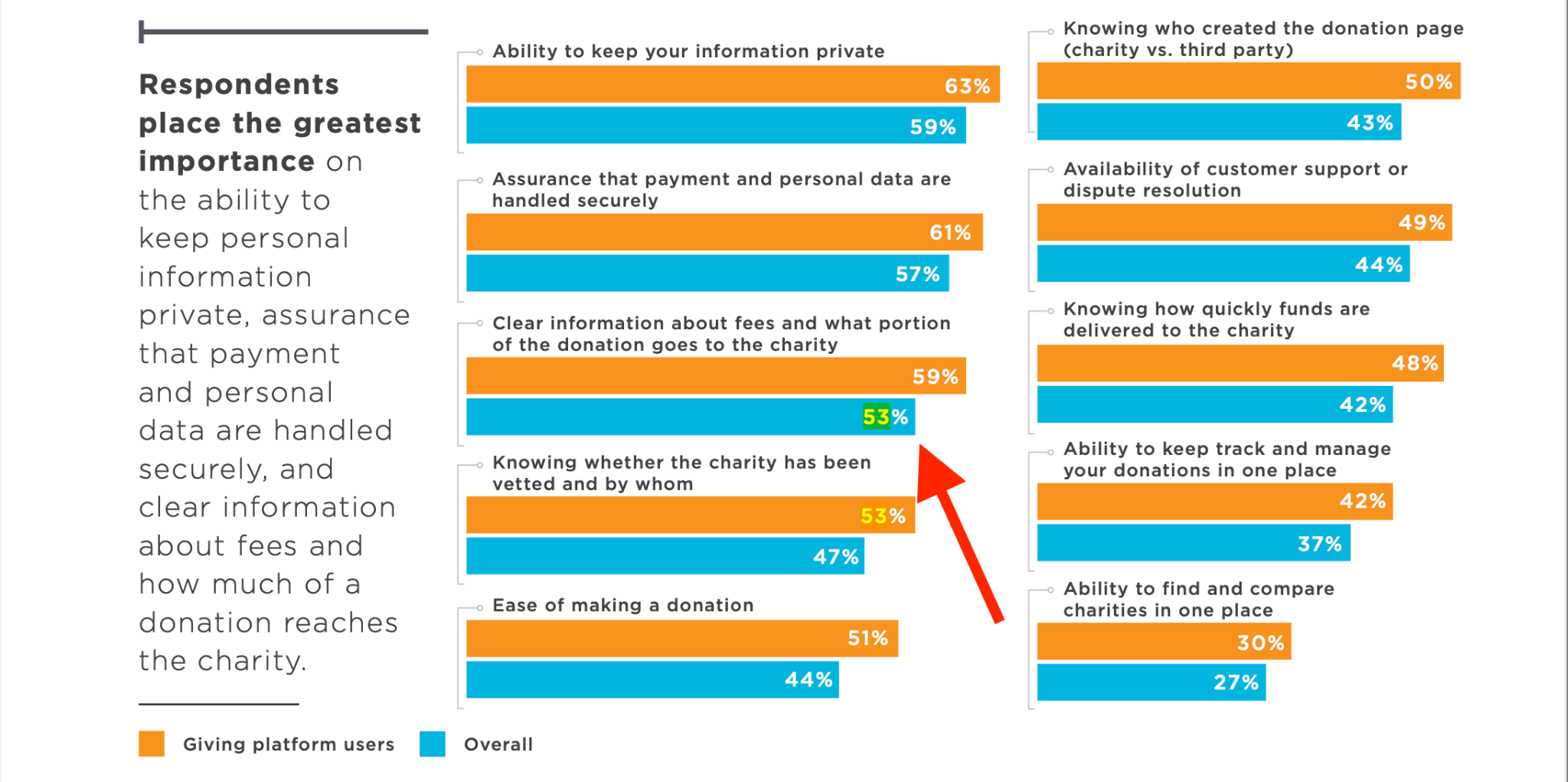
It’s a fair question, especially when Give.org found that 53% of giving-platform users cite transparency about fees and how funds are used as a reason to trust a platform.
(1)
This means - when they look over their donation - a few things should be easy to spot:
- Their gift: What they chose to donate and how much your nonprofit will receive after deductions.
- The fees: What each processing or platform charge covers, who collects it, and who's paying.
- Any extras: Who receives a tip or voluntary contribution, and how to turn it down.
Your nonprofit might have subscription or service fees of its own, but those are separate costs to explain.
And when someone reaches that final Pay button, they should see the full amount they'll be charged, with every extra accounted for. If they're happy to give a little more - great. But it’s important they know exactly what they're agreeing to.
Where Donations Go and When Funds Arrive
A supporter can have their receipt while your team is still waiting for the money. With some platforms, an intermediary receives the donation, issues the tax receipt and then passes the remaining funds on to your nonprofit.
That's all well and good, but what if you've got gala suppliers waiting to be paid?
A “payment successful” message won't tell you much, so your platform should make clear who's holding the money, when you can withdraw it and how long it'll take to reach your bank.
Real World Example:

(6)
Since Givebutter runs on Stripe Connect, donations are typically available to withdraw within 48 to 72 hours. After your team requests the payout, the money takes another three to five business days to reach the bank.
That lag is worth tracking when you’re scheduling payments to - for example - those gala suppliers. Reviews or disputes can stretch the timeline, so building some buffer into your payment schedule is wise.
If a guest asks for a refund, your team also needs to confirm how much goes back to them, whether fees or tips are included, and who processes it.
Donor Privacy and Communication Preferences
Money isn't the only thing passing through a donation platform. Supporters share personal details along the way, and some are happy to hear from your team again while others would rather leave things there.
Real World Example:
(7)
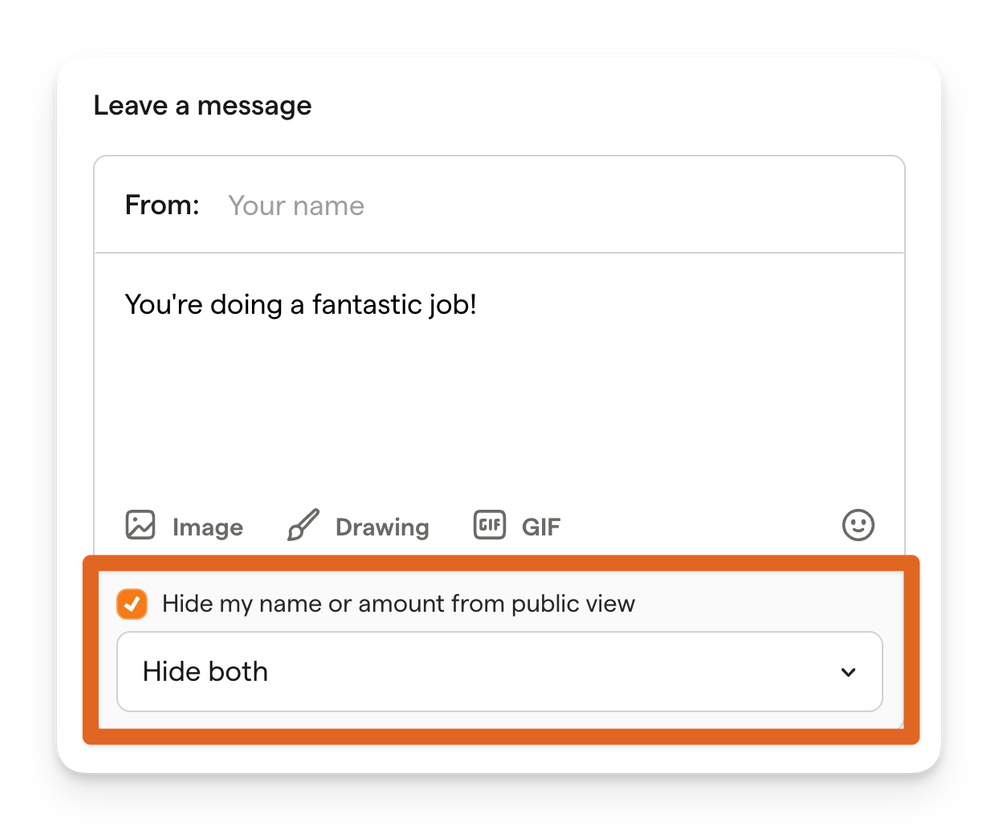
Givebutter lets donors hide their name, donation amount or both from public view, while the organizer still receives their details privately. It also keeps donation receipts separate from the choice to receive your nonprofit's messages.
Those distinctions are worth making clear on your own donation form, along with whether details go to other companies.
Why Transparency Matters at Fundraising Galas

That kind of clarity counts when you’re using your platform for a gala too. Over the course of one evening, a guest may pass through several checkouts, each handling charges and optional extras differently:
- Buying tickets
- Paying for auction wins
- Fulfilling paddle-raise pledges
Before gala night, your team can try each checkout on a phone. That gives you a chance to compare the final charge, receipt and event report while there's still time to question anything confusing.
A Gala-Night Hypothetical:
Let's say someone pledges $500, then pays online and agrees to a hypothetical 15% platform contribution. Their card is charged $575, but only $500 goes to your nonprofit.
In this example, their receipt should show the $500 donation and $75 contribution separately.
We think the lesson to learn here is that your reports should distinguish money pledged from money collected, then show gross donations before deductions and net proceeds afterward.
What Part of a Gala Payment Is Tax-Deductible?

(8)
But what if the guest receives something in return for their payment? That’s where gala tickets and auction wins differ from a straightforward donation.
In the US, guests may generally deduct only what they pay above the fair market value of the meal, auction item or other benefit they receive.
That can leave three different numbers:
- The total charged to the guest’s card
- The amount your nonprofit receives
- The amount the guest may be able to deduct
For payments over $75 that include goods or services, the IRS requires a written disclosure explaining that only the amount above fair market value is deductible. It must also give a good-faith estimate of what the guest received.
Related Read:
Are you still weighing up how to sell your gala tickets? Our nonprofit event ticketing guide explains what to compare before choosing a platform for ticket sales and registration.
A Practical Transparency Checklist for Choosing a Platform
Once you've seen how ticket purchases, auction payments and paddle-raise donations work, try following one payment from the guest's checkout to your finance report. If the figures don't match, can the provider explain where the difference comes from?
That's a fair test for PayBee and every other platform you're considering. After all, wouldn’t you rather question a confusing charge during a demo than have to explain it to a guest on gala night?
Evaluating PayBee for a Transparent Gala Experience
After asking you to put every provider through those checks, we should show you how PayBee handles them too.
What Guests See at Checkout
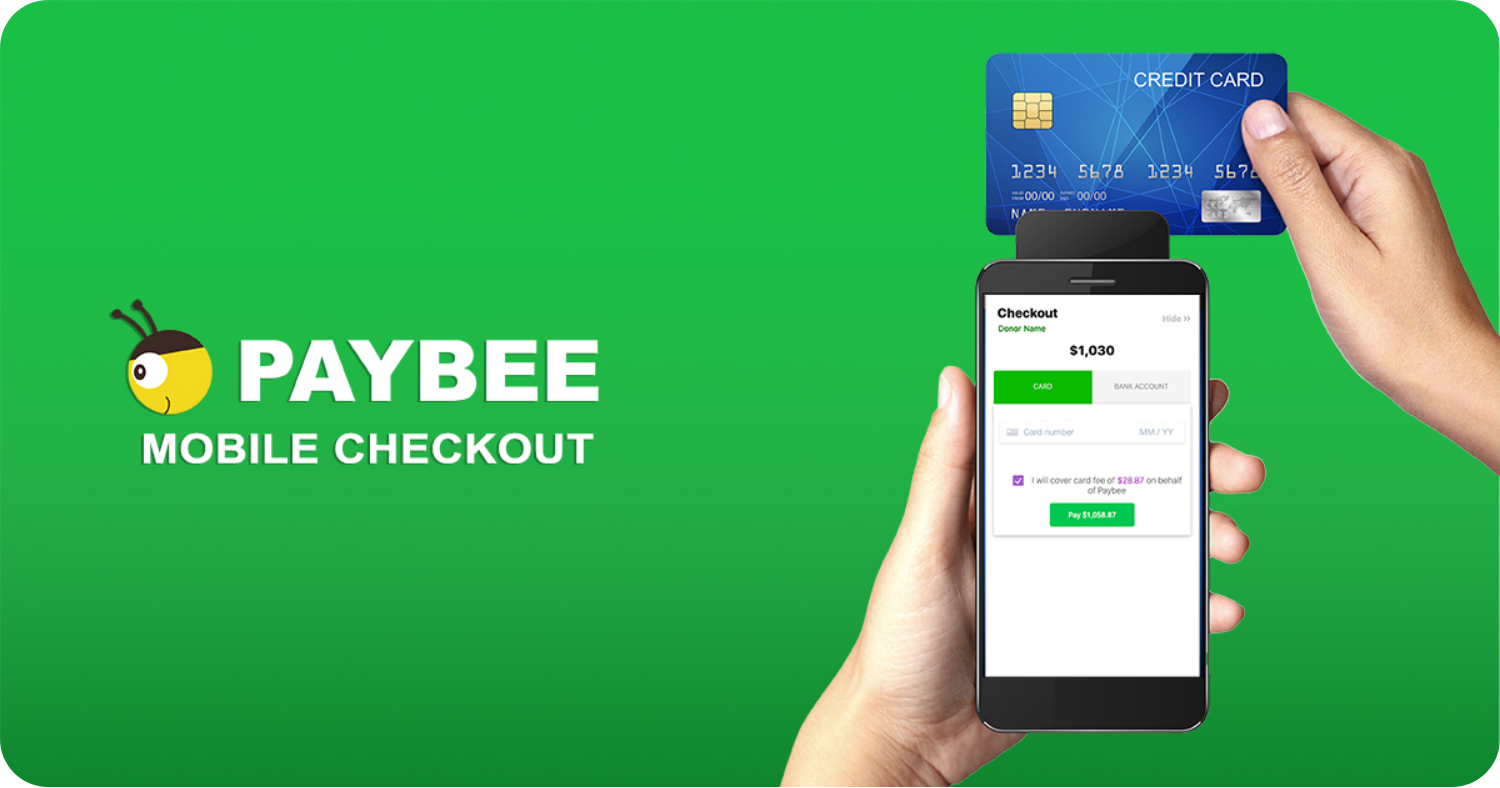
At PayBee, we tick the card-fee box by default, but guests can untick it before paying. If you'd rather ask differently, you can start it unchecked, hide or reword it, and choose whether coverage includes our platform fee as well as processing.
What Your Team Can Trace
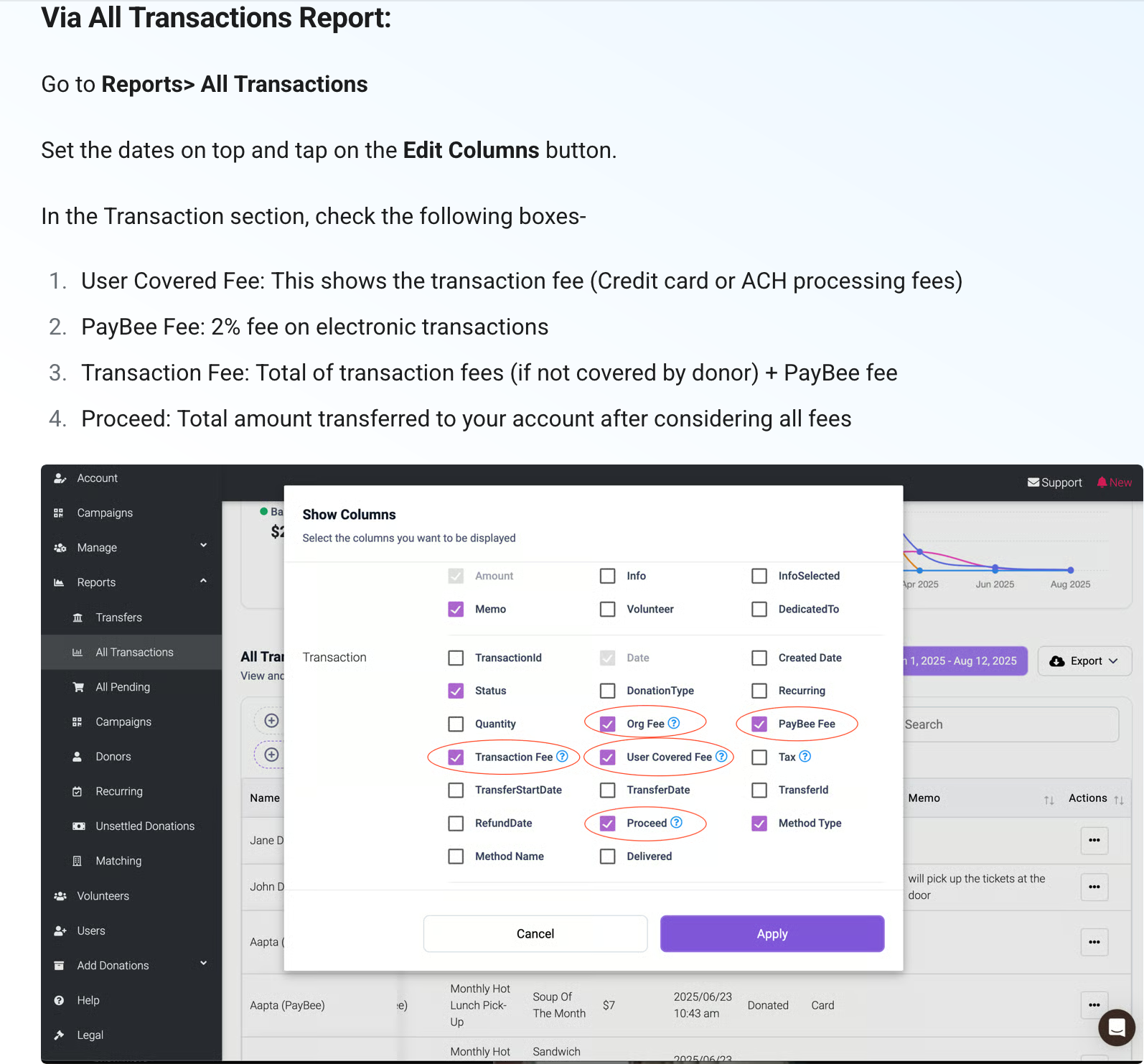
Once gala night is over, your team can find each payment in your PayBee account under:
Reports > All Transactions.
Then, after choosing the relevant date range and selecting Edit Columns, staff can view the donor-covered fee, PayBee fee, transaction fee and proceeds side by side.
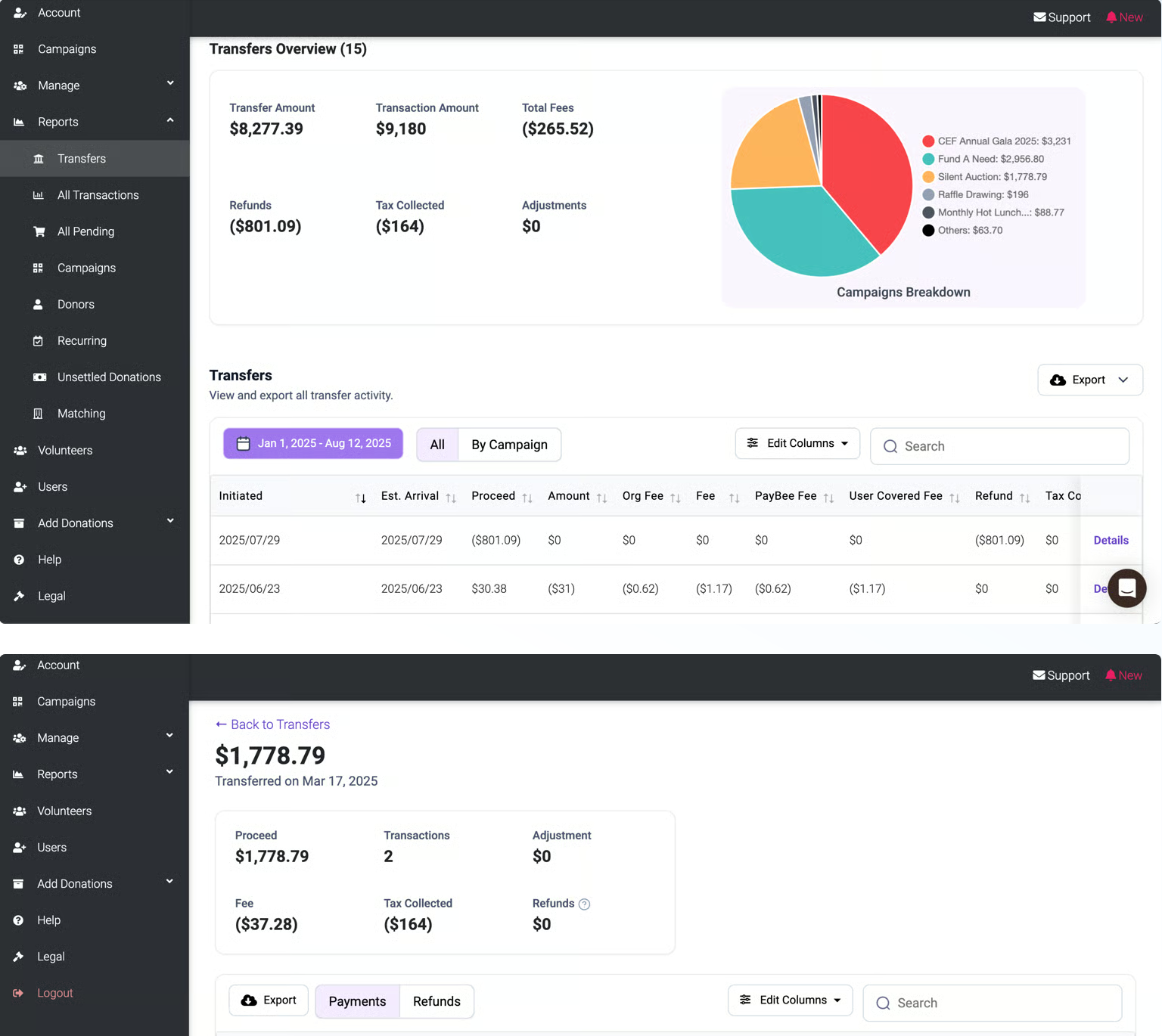
Your next check is the bank deposit itself. The Transfers tab groups payments by transfer, and its daily total is the figure to compare with your deposit, since rounding can leave individual estimates a cent out.
What PayBee Costs
As for your own costs, our fee is 2% on electronic payments, with card processing at 2.7% + $0.30 or ACH at 1.3%.
For events, we charge a $399 one-time Fundraising Events setup fee, while our $599 Premium Events membership includes unlimited events for two years.
Would you like to see how that works for your gala?
Book a demo and we'll walk you through checkout, fee choices and staff reports.
Frequently Asked Questions
What Is the Givebutter Lawsuit About?
As of October 2026, two proposed class actions against Givebutter remain pending. Donors say processing fees and tips appeared without proper disclosure or consent, but neither court has ruled on those claims.
Are Zeffy’s Platform Contributions Optional?
Yes, although donors have to change the suggested amount if they don't want to contribute to Zeffy. Zeffy says they can lower or remove it before paying, and the nonprofit still receives the full donation.
What Is the Difference Between a Processing Fee and a Platform Tip?
Processing fees cover the cost of handling card or bank payments. A platform tip is separate and goes to the fundraising company, usually as an optional payment toward running the service.
Does “Free for Nonprofits” Mean Donors Pay No Additional Amounts?
No, a platform can charge the nonprofit nothing while asking donors to cover processing costs or leave a tip. That can leave the donor with a higher total at checkout.
How Can a Nonprofit Check Whether Its Donation Form Is Transparent?
When someone on your team makes a small test donation on a phone, they'll see the checkout as a donor does. Any optional charge should be easy to spot and remove, and the final total should match the receipt and transaction record.
Conclusion: Choose a Platform Your Team Can Explain to Donors
So, after everything we've covered, how confident are you about what your own guests will see?
A quick test of ticket, auction and pledge payments on your phone should help put you in their shoes.
Are the costs clear, can guests easily decline optional extras, and does the final total make sense?
Those questions apply to us as much as any other platform, and the answers are easier to show in practice than to describe on a page.
Book a PayBee demo with us today, and let's give your payment process a proper dress rehearsal before the guests arrive.
Sources:
1- https://give.org/donor-trust-report/2026-special-report-online-giving-platforms-donor-expectations
2 - https://dockets.justia.com/docket/pennsylvania/paedce/2:2026cv02668/653384
3 - https://truthinadvertising.org/class-action/givebutter/
4 - https://www.zeffy.com/
5 - https://feedback.zeffy.com/feature-requests/p/voluntary-contribution-defaults-to-0
6 - https://givebutter.com/blog/stripe-for-nonprofits
7 - https://help.givebutter.com/en/articles/1726570-how-to-submit-a-donation-to-a-givebutter-campaign
Start Fundraising
 Jason Donegan
Jason is a seasoned technical writer and analyst. He loves all things niche websites, SEO, and digital marketing. In his free time, he is learning something new about this industry or sifting through domains for his next project.


