

Best Software to Manage Fundraising Sponsors in 2026
TLDR — The Best Sponsor Management Software in 2026
- Running an annual gala or auction? PayBee keeps sponsorship packages, recognition, and post-event reporting tied to the same event.
- Managing sponsors all year? Bloomerang and Salesforce NPSP make more sense when those relationships sit alongside major donors, grants, and longer-term fundraising activity.
- Need a free place to manage outreach? HubSpot for Nonprofits gives smaller teams a workable CRM starting point for prospecting and follow-up.
- Need to find sponsors outside your own network? SponsorMyEvent adds a public marketplace where brands can discover events and sponsorship packages.
- Still doing all of this in spreadsheets? For most event-focused nonprofits, moving to an event-integrated platform can save 8–12 hours of admin per gala and improve renewal rates.
Q: What is the best software to manage fundraising sponsors in 2026?
The best software to manage fundraising sponsors in 2026 is PayBee for event-centric nonprofits - it connects tiered sponsorship packages directly to event ticketing, seating, on-night recognition, and post-event reporting in one platform.
Bloomerang and Salesforce NPSP are stronger choices for organizations managing sponsors as year-round major donor relationships, while HubSpot for Nonprofits offers a free CRM that adapts well to sponsor outreach pipelines.
For a typical 200-guest gala with $25,000–$40,000 in sponsor revenue, purpose-built sponsor management software typically saves 8–12 hours of staff time per event vs. spreadsheets - and meaningfully improves year-over-year renewal rates.
Intro
Corporate sponsors can represent 20-40% of a nonprofit's event revenue - but most organizations manage them in spreadsheets, missing follow-ups and leaving money on the table.
Has your team spent the entire week before a gala trying to find the right version of the sponsor sheet? Maybe you were arguing about who was supposed to insert the sponsor’s logo in the right spot, or checking that everyone was using the most up-to-date spreadsheet. If this is how you run your sponsorship program, then a shared Google Sheet is more of a burden than a solution.
A good fundraising sponsor management tool will put prospecting, packages, payments, event-night recognition and post-event follow-up in one spot.
In this article, we’ll review seven sponsor management platforms, highlight important features to look for, and outline a six-stage sponsor workflow.
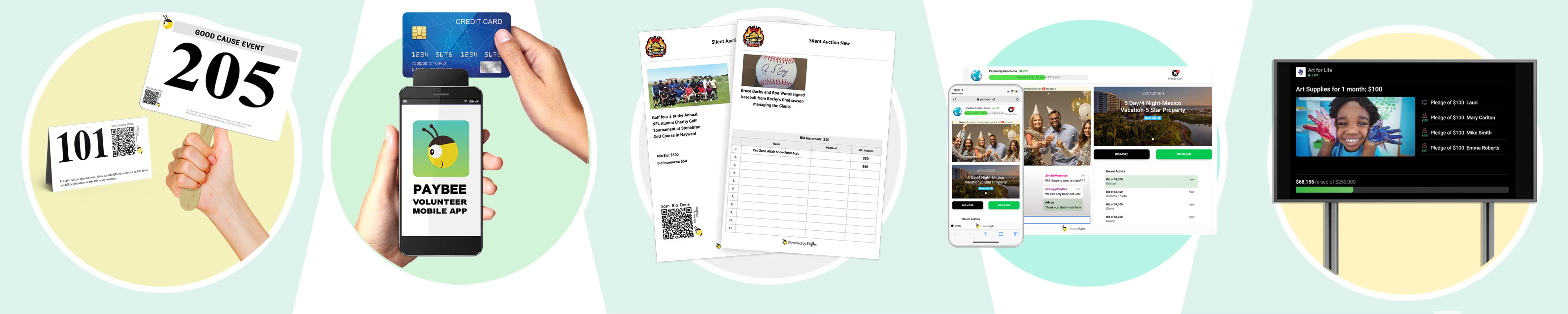
For galas, benefit dinners, and nonprofit auctions, the PayBee event platform combines sponsor packages with ticketing, seating, and post-event reporting.
What Is Fundraising Sponsor Management Software?
Nonprofit sponsor management software is a platform that helps your team organize sponsor prospects, manage sponsor outreach, handle tiered sponsorship packages, coordinate sponsor recognition during events, and report on sponsorship impact - all in one workflow.
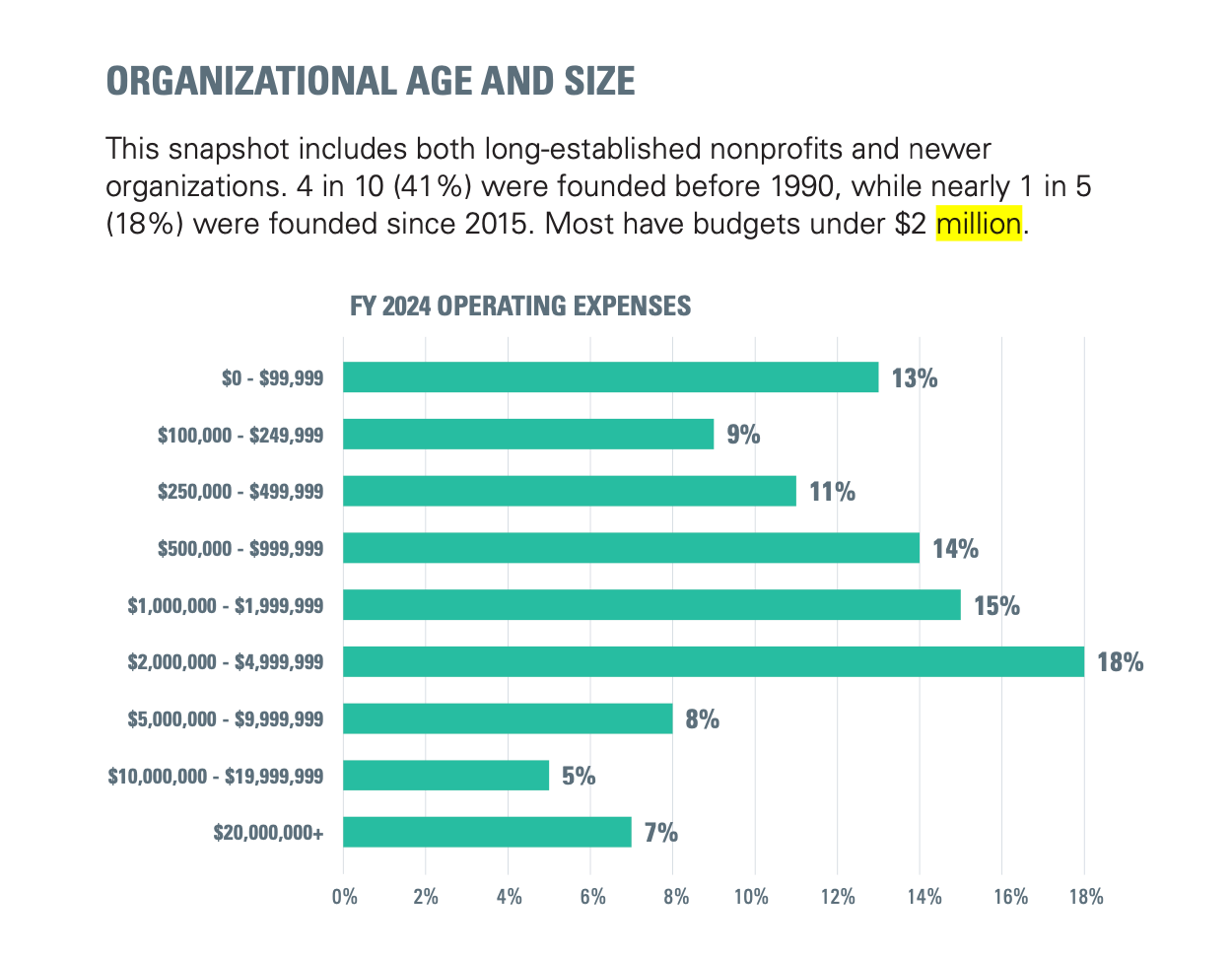
Our research found that most nonprofits run on budgets under $2 million, according to the Nonprofit Finance Fund's 2025 State of the Sector Survey.
And if that sounds like yours, you already know how stretched a small development team can get:
(Image source: 1)
Before choosing a platform, decide whether you need event integration or year-round CRM depth.
- PayBee and OneCause connect sponsor packages with ticketing, seating, and recognition
- Bloomerang and Salesforce NPSP focus on year-round relationships and need extra setup for event-specific requirements
Related Read: see our PayBee vs OneCause guide on how the two compare.
How is sponsor management software different from a general CRM?
A regular CRM will track a relationship, communication history, and donations, but does not handle the complete logistics of an event sponsorship.
The sponsor management software is also equipped with tiered packages, payment-to-seating connections, and event night acknowledgements, covering what your CRM might miss.
Do I need sponsor management software if my nonprofit already runs galas?
It depends on your current platform. If it already handles sponsor packages, promised benefits, and post-event reporting alongside event tools, you may have what you need. If it mainly handles ticketing and auctions, sponsor stewardship between events may still need another system.
Related Read: Our Ticketing Software for Charity Events compares those options for you.
Key Features to Look For in Sponsor Management Software in 2026
If you're comparing platforms, good sponsor tracking software for nonprofits covers four phases - pipeline, package management, event-day recognition, and reporting and renewal. Getting all four working together is what tends to make the difference between sponsors who come back and those who don't.
Sponsor Pipeline Features
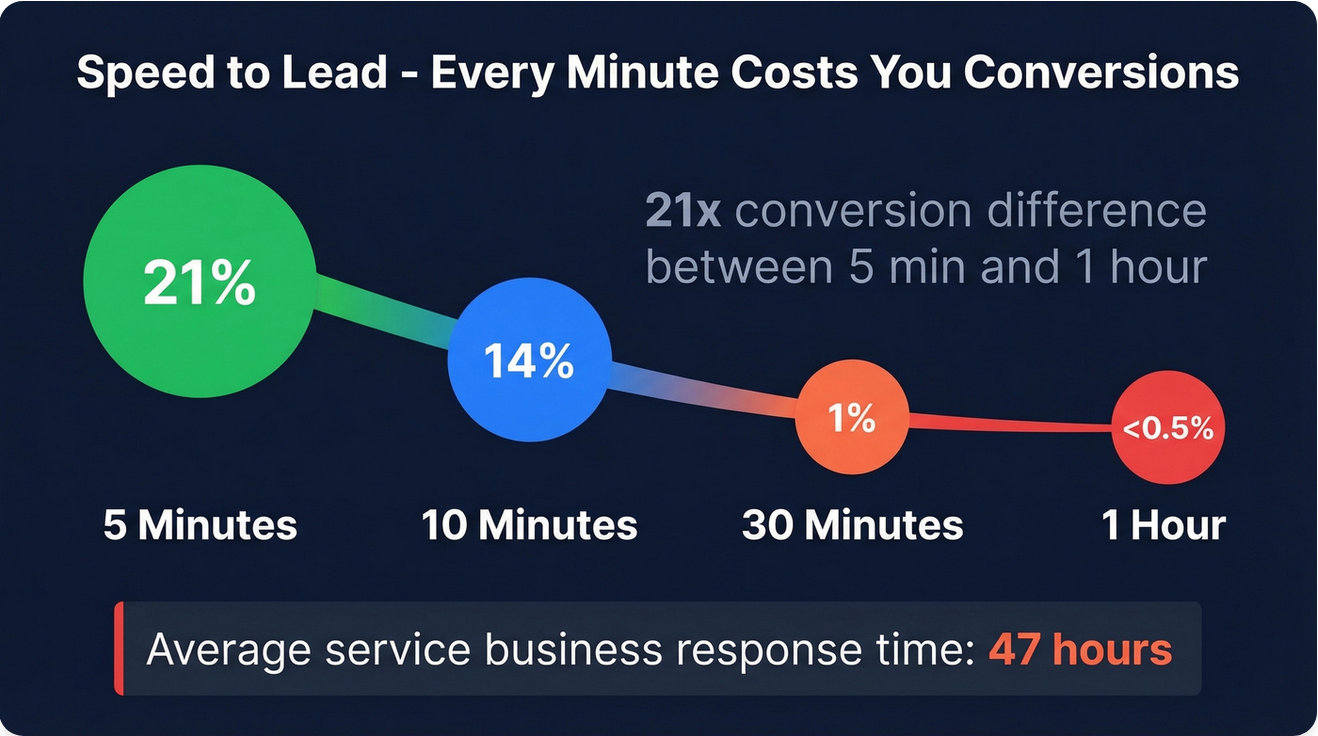
Follow-up is where sponsor pipelines often stall, so every prospect conversation and next step needs a clear owner.
(Image source 2)
Research from Prospeo shows the average business takes 47 hours to follow up with a prospect - by which point the conversation has often gone cold. Here's what to look for:
- A contact database with full relationship history and interaction notes
- Outreach email sequences with automated follow-up scheduling
- Stage tracking so everyone on your team knows what's confirmed, pending, or gone cold
Package and Proposal Features
And after signing up, you have to ensure that they understand what they're getting from you in terms of the package.
In 2026, electronic signatures are enforceable in most states and therefore your proposals and sign-offs can go through without paper.
Look for:
- A tiered package builder covering Bronze, Silver, Gold, and Platinum levels with specific benefit listings per tier
- Proposal and agreement tracking with payment status and invoice generation
- Benefit fulfillment monitoring so every sponsor commitment gets checked off before event day
Event-Day Recognition Features
By the time your event arrives, every sponsor tier has specific commitments attached to it, and a platform that manages those automatically frees your team to focus on the night itself.
When the doors open, the software should cover:
- Recognition scheduling tied to each tier level, covering screens and printed programs
- Table and seating management connected directly to each sponsorship package
- MC scripting and stage cues built into your run-of-show
Reporting and Renewal Features

(Image source: 3)
A joint ANA/IEG survey found that 65% of marketers don't measure sponsorship returns at all. When a Gold sponsor asks what they got for their $7,500, your software should already have the answer.
It should cover:
- Post-event impact reports covering attendance, funds raised, media reach, and sponsor-specific metrics
- Automatic CRM sync so event interactions update sponsor profiles without manual data entry
- Full relationship history and communication notes
- Automated renewal reminders with configurable timing
What is the most-overlooked feature in sponsor management software?
If there's one thing worth going back to configure properly after setup, renewal reminder automation is it. In our experience, that gap alone is what separates a 40% sponsor renewal rate from a 70% one. Yet, most nonprofits leave it sitting untouched - which is a bit like buying a good alarm system and never switching it on.
Top 7 Software Options to Manage Fundraising Sponsors in 2026
We found these 7 nonprofit sponsor management platforms most widely used by nonprofits in 2026 and ranked them by their suitability for an event-focused sponsorship program:
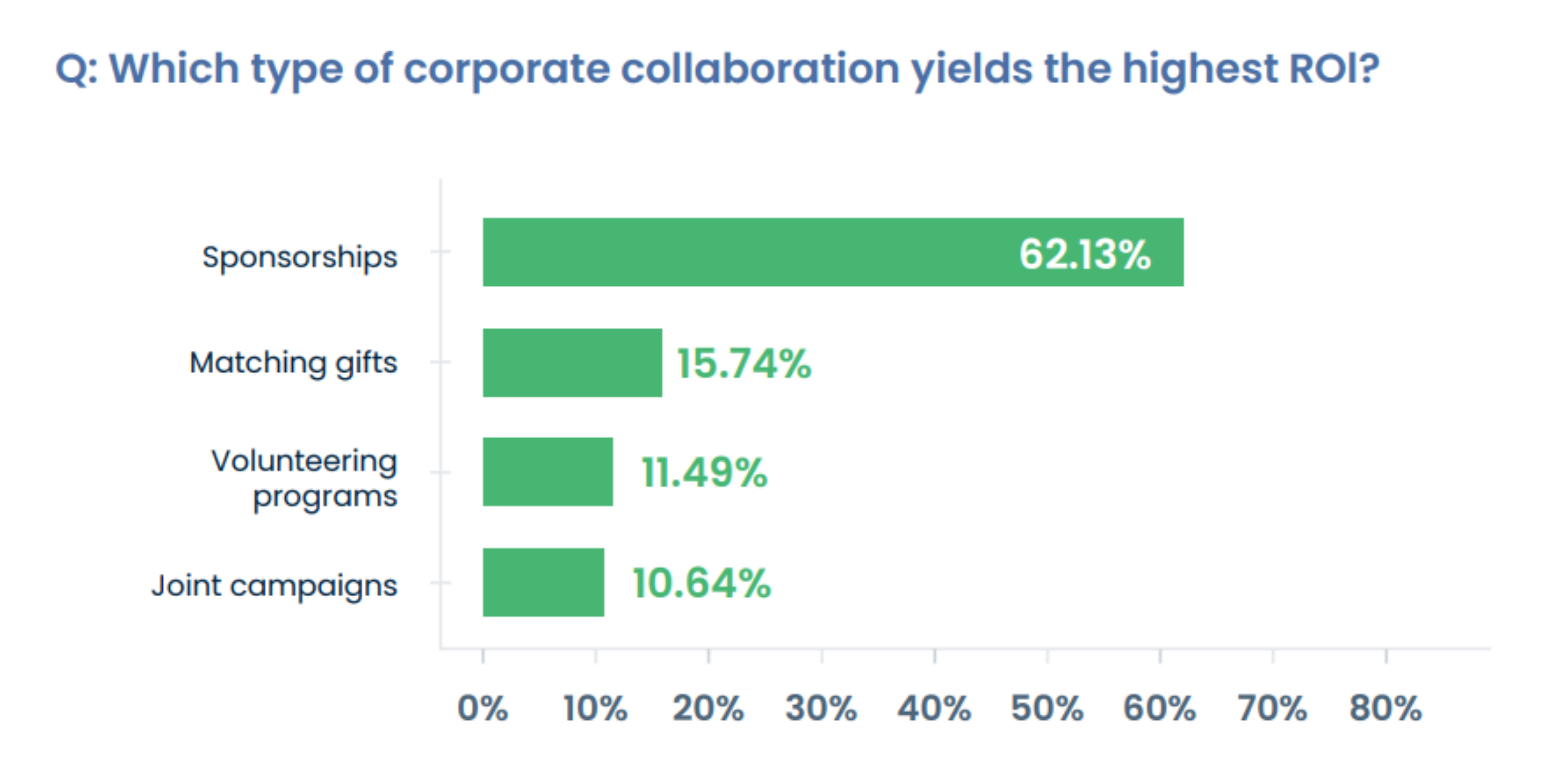
And one survey results show that 62% of nonprofits believe that corporate sponsorships provide the best return on investment of all corporate giving programs:
(4)
That makes picking the right fundraising sponsorship management platform worth a careful look - here's how the top seven compare:
[Table here]
Let’s look at these in more detail for you:
1 - PayBee:
Best for: nonprofits running galas, auctions, and raffles, with nonprofit-friendly pricing and no large upfront cost. On event night, check-in, mobile bidding, and self-checkout all run through the same platform.
What sets it apart: PayBee and OneCause both run live hybrid auctions with in-room and online guests bidding together in real time.
There is a meaningful fee difference too: PayBee pricing lists a 2% electronic transaction fee, compared with OneCause’s 5% on pay-as-you-go - something worth weighing when the post-event numbers come in.
Related Read: See our Nonprofit Gala Event Software guide for a wider comparison of gala platforms.
2 - Bloomerang:
Best for: Year-round sponsor management with a desire for those connections to be kept with the donors’ records in one place, along with donor history, grants, tasks, emails, etc. Price starts at $125/mo (billed yearly) for CRM.
What sets it apart: Bloomerang has its own engagement meter which automatically updates as data is entered into the system, and the DonorSearch-powered Generosity Score so staff can look at donors’ most recent activity next to their estimated ability to give, side-by-side on the same profile.
3 - OneCause:
Best for: Auction-led fundraising events, including galas and golf tournaments, where sponsorship sales connect directly with tickets, tables, bidding, and checkout, with the Professional Auction & Event plan priced at $2,995 per year and Pay-As-You-Go charging a capped 5% fee.
What sets it apart: OneCause’s built-in Sponsor Game places sponsor logos inside an interactive event game and reports impressions by placement, average playing time, total games, and unique players, giving sponsors engagement data the other six platforms do not offer through a comparable built-in feature.
4 - Salesforce NPSP:
Best for: Nonprofits with complex fundraising operations, dedicated Salesforce administration, and a budget of $10,000-$50,000 to pay a consultant for setting up the software (this includes migrating your data, configuring the software, adding in integrations, and training your staff).
What sets it apart: NPSP can automatically create a soft credit from an Affiliation record without altering the donor on the payment. So the employee or foundation contact who facilitated the gift gets credit, even if it’s not directly from them.
2026 note:
NPSP remains supported and can still be installed manually on eligible Salesforce editions, but Salesforce now focuses future nonprofit product development on Agentforce for Nonprofit. Its current pricing page lists Nonprofit Cloud Enterprise at $60 per user per month billed annually.
5 - HubSpot for Nonprofits:
Best for: Growing nonprofits that want contact records, email campaigns, and website tracking in one place, with a free CRM available and Marketing Hub Professional costing $890 per month, or $534 per month for eligible new nonprofit customers receiving HubSpot’s 40% discount (plus a required $3,000 one-time onboarding fee).
What sets it apart: Once HubSpot knows who a website visitor is, it can link their page visits to their contact record and use that activity to send automated emails before they donate, although this requires a Professional or Enterprise plan and visitor consent where required.
6 - Wild Apricot:
Best for: Associations, clubs, and other nonprofits with memberships that need to track member data and bill recurring dues. Costs $66/month for 100 contacts as of 2026, scaling up based on contact count.
What sets it apart: Of the seven, Wild Apricot is most focused on memberships, including recurring dues, member self-service portals, member directory searches, and member websites.
7 - SponsorMyEvent:
Best for: Nonprofits looking to find sponsors beyond those they already have. Free for one live event, 15% of sponsorships that are completed, or $35/month for Visibility plans (still takes 15%).
What sets it apart: Of the seven, SponsorMyEvent is the only public sponsorship marketplace, meaning brands can search through listed events, view their sponsorship offerings and negotiate directly with event organizers.
What software is best for managing nonprofit sponsors?
PayBee sponsorship management suits event-focused nonprofits, Bloomerang or Salesforce suit year-round sponsor relationships, HubSpot’s free CRM suits basic outreach, and SponsorMyEvent helps find new sponsors.
Is a CRM or event platform better for managing sponsors?
A 2026 report based on more than 800 nonprofit professionals found that 90% use at least three core software applications and 70% use five or more.

(5)
Now, that doesn't prove every nonprofit needs both systems, but it shows multi-tool setups are common.
For sponsors, PayBee handles packages, ticketing, seating, and event-night recognition, while a nonprofit sponsorship CRM keeps relationship history and follow-up organized year-round.
The 6-Stage Sponsor Management Workflow
When sponsor details are scattered across spreadsheets and email threads, payments and promised benefits can slip through. A six-stage workflow from prospecting to renewal gives each detail a place in the process, while sponsor management software helps you track what comes next.
Stage 1: Prospect
Start close to home. Build a prospect list of businesses operating in your area, then check their giving priorities, existing cause marketing partnerships, audience, and values for a fit with your mission.
(6)
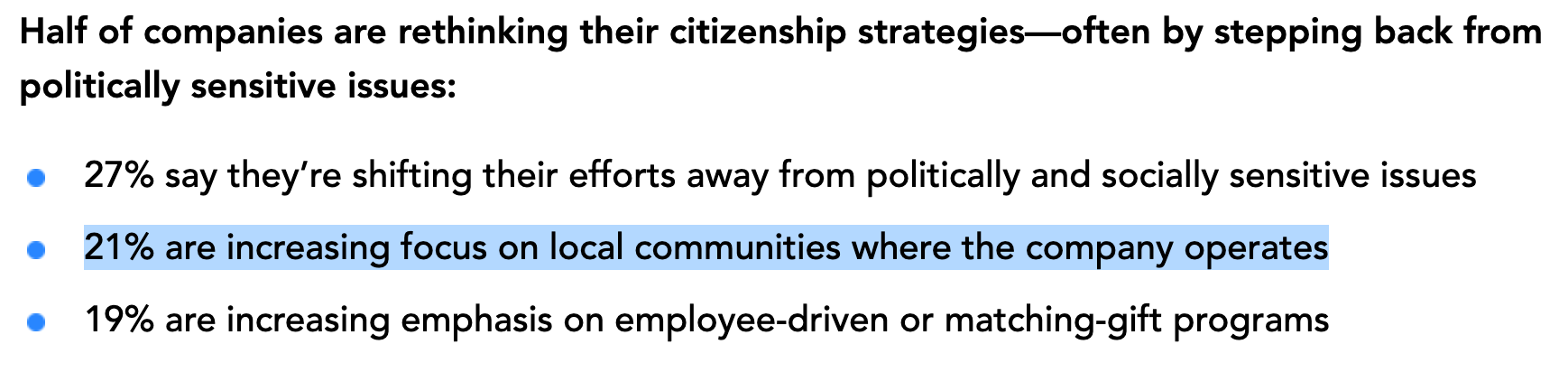
There's a practical reason for the local focus: in a 2025 Conference Board survey, 21% of corporate citizenship leaders said their companies were increasing their focus on the local communities where they operate.
Stage 2: Outreach
Send personalized sponsorship proposals that explain why the partnership fits that business. If you don't hear back, follow up after seven days and again around day 14.
Stage 3: Agreement
Once a business says yes, confirm the tier, collect payment, and write down exactly what each side has agreed to, whether that includes table sponsorship, naming rights, or an in-kind sponsorship.
Note:
If you're a 501(c)(3), check IRS sponsorship tax treatment before promising promotional benefits, since qualified sponsorship payments generally involve acknowledgment rather than advertising or another substantial return benefit.
Stage 4: Event Prep
Collect each sponsor’s logo and bio, assign any tables or seats, and set up every recognition item promised in the agreement. Check those details before the event so signage, screens, programs, and guest lists are ready before sponsors arrive.
Related Read: See our guide to Event Registration and Donation Software for a closer look at registration, ticketing, donations, check-in, and event-day tools.
Stage 5: Event Night
During the event, make good on every recognition promise, from sponsor announcements to logo placement and signage. Check visibility throughout the night so nothing agreed in Stage 3 gets missed.
Learn more: Explore PayBee gala features for live auctions, donations, ticketing, raffles, reporting, and virtual or hybrid event tools.
Stage 6: Post-Event
Send sponsors a brief impact report with metrics that are verifiable and request feedback about the event from their perspective.
(7)
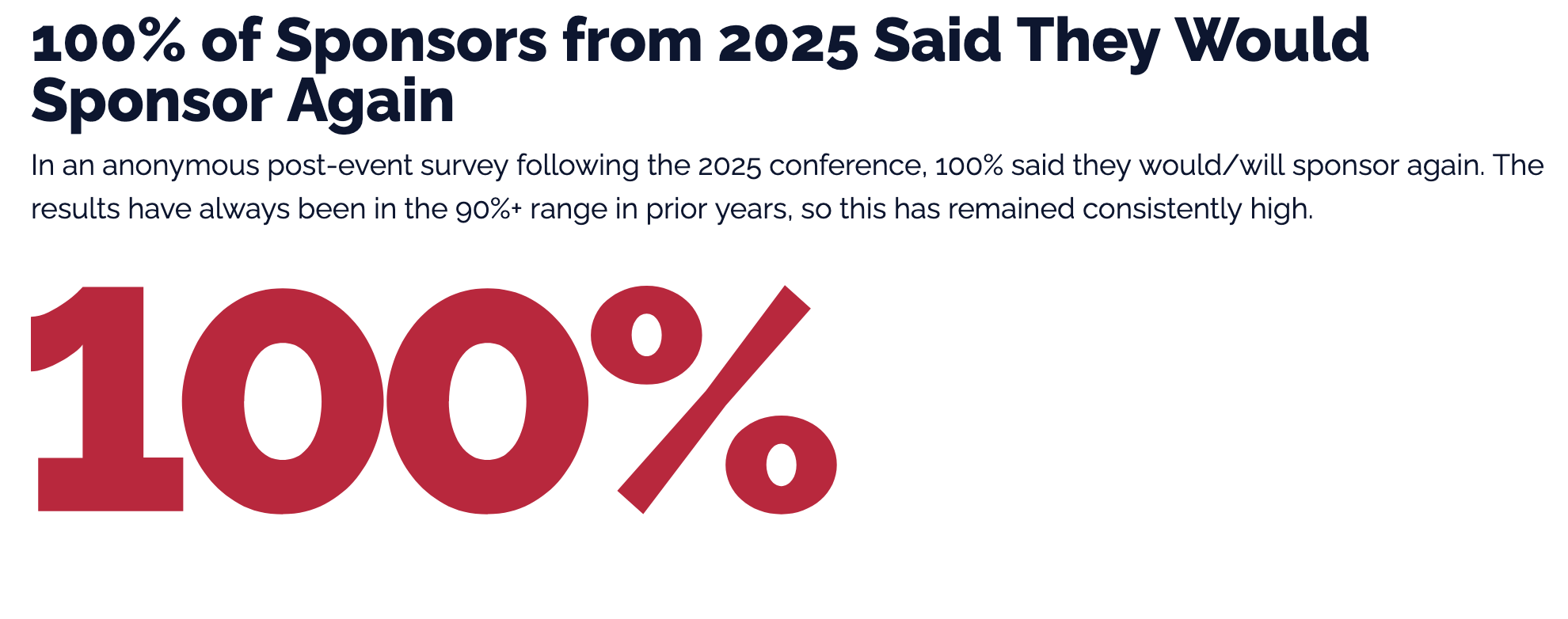
For instance, when All Things Open held their 2025 conference, all of the sponsors who filled out their post-event survey indicated they would sponsor again, so use your own follow-up to determine likelihood of renewal and invite sponsors back to the next event within two weeks.
How do I track sponsorships for a nonprofit event?
Keep all of the information about each sponsor in one place, including the tier level, whether or not they have paid, the commitments they made, any recognition they are entitled to receive, and the dates for your follow-up interactions. A corporate sponsorship management system allows your entire team to see, at a glance, what was pledged, what was fulfilled, and what remains outstanding.
How do nonprofits find corporate sponsors?
Begin with companies in your community, and reach out to board members, donors, and volunteers to introduce them to potential sponsors. When those connections are exhausted, post your event on SponsorMyEvent, where sponsors can find it and reach out to you directly.
Manage your next event’s sponsors in PayBee
Building a Sponsorship Package Structure That Converts
Whether you’re building packages for a gala, golf tournament, or faith-based fundraising event, give sponsors a few clear ways to get involved rather than one fixed offer.
Three to five tiers can cover different budgets and benefits, with a separate option for custom packages or in-kind donations.
Example Sponsorship Tiers
- Bronze - $500: Logo placement and basic event recognition.
- Silver - $2,000: Bronze benefits plus stronger placement and added guest access.
- Gold - $7,500: Higher-visibility branding, premium seating, and expanded recognition.
- Platinum - $25,000+: Top billing, prominent branding, and premium benefits such as naming rights.
- Custom / In-Kind: Flexible packages for sponsors contributing services, products, or other in-kind donations.
Related Read: See our guide on How to Create a Sponsorship Package for more on choosing tiers, benefits, and what to include in your proposal.
What should a fundraising sponsorship package include?
Be specific about pricing, sponsor perks, demographics, logo location, event attendance, deadlines, and any naming or other recognition opportunities per level. Once you’ve created your plan, event sponsor management software will enable you to ensure that these agreed-upon benefits are matched with the appropriate sponsor as they are purchased.
How much do corporate sponsors typically give to nonprofit events?
For smaller community events, sponsorship packages often run from about $500 to $5,000, while larger urban galas can offer top tiers from $10,000 to $50,000+.
We recommend that you build three to five tiers across the range so local businesses and larger corporate partners both have a realistic way in.
Measuring Sponsor ROI and Building Long-Term Relationships
Sponsors may enjoy your event and love the mission, but that doesn’t mean they can easily tell their bosses what their money bought.

(8)
In fact, nearly three-quarters of sponsorship pros at WFA’s 2025 Global Sponsorships and Partnerships study said that measuring and demonstrating ROI was a key challenge, so the work continues post-event to help your sponsors easily understand and share that value.
- Share exactly what they purchased: Provide data on attendance, revenue generated, press hits, social impressions, and other deliverables connected to the package level.
- Personalize your thanks: Within 48 hours of the event, let the sponsor know how they helped, and use their organization’s name
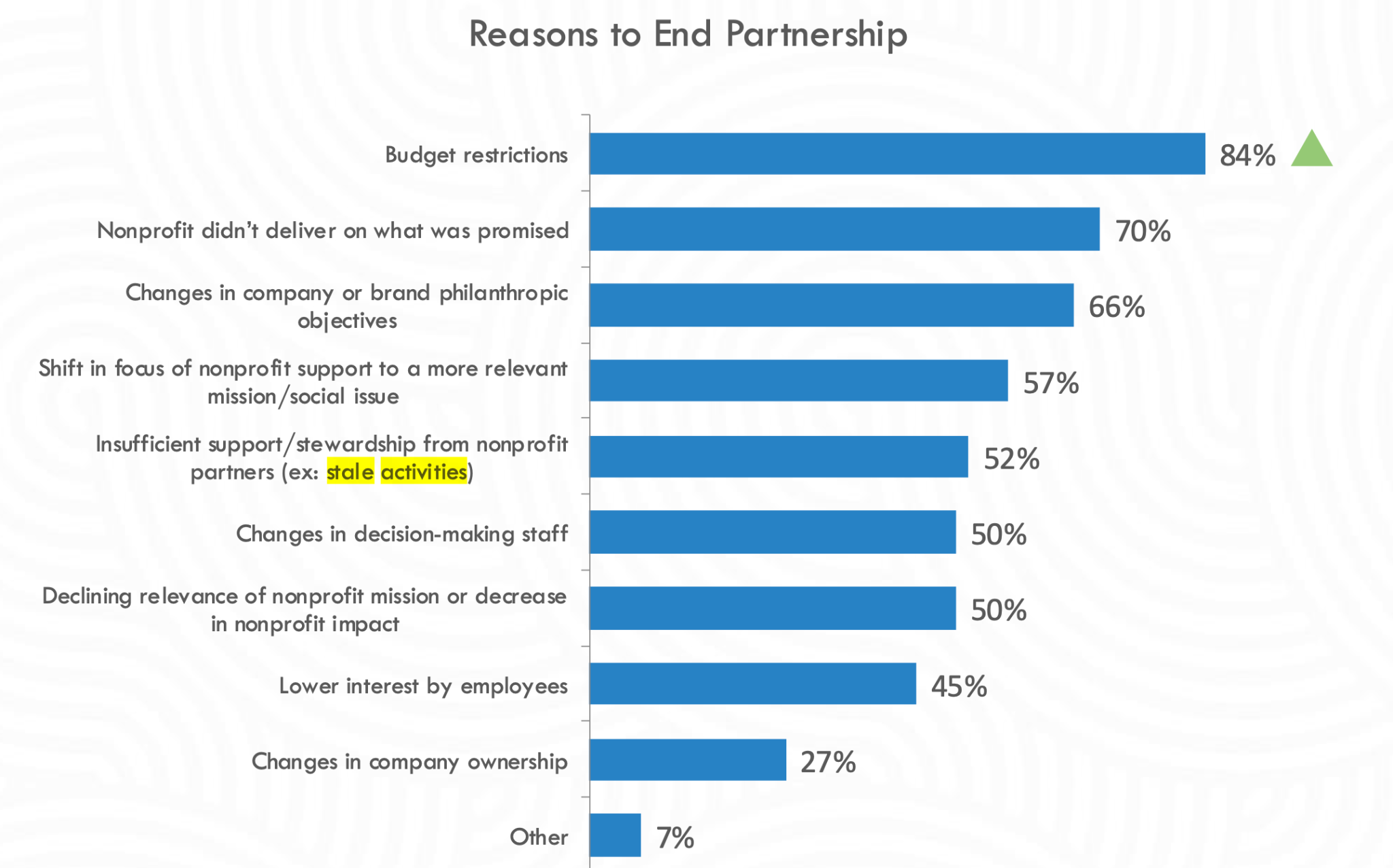
- Stay in touch throughout the year: Send a status update and/or an impact story during the summer. According to For Momentum’s 2025 survey, 52% of corporate sponsors say that poor stewardship or inadequate communication contributes to their decision not to renew.
(9)
- Give returning sponsors priority access: Before you offer the next year’s slots to prospective clients, give your previous sponsors a chance to renew in kind, or upgrade to a higher tier.
- Keep recognition running all year: Whether your sponsor agreed upon logo mentions in your print or online marketing materials, or inclusion in your annual report, follow through on every aspect of the package.
Customer proof callout (REQUIRED — visually distinct):
When [Charity Name] moved from spreadsheets to PayBee for their 2025 gala, they saved [X] hours of staff time over the 3-month outreach window — and lifted YoY renewal rate from [Y%] to [Z%] via automated impact reports and renewal reminders. Net: $[A] in retained sponsor revenue without growing the team.
Verify name + numbers with PayBee account team. Real names + numbers only.
How do I retain fundraising sponsors year over year?
Keeping a sponsor from one year to the next usually comes down to what happens after everyone goes home.
That can mean sending an impact report within two weeks, sharing a genuinely useful program update around mid-year, making an early renewal offer, and continuing the recognition you promised across your website, newsletter, and annual report.
Ready to Stop Losing Sponsors to Spreadsheets?
If your sponsor details are still bouncing between spreadsheet tabs, buried emails, and last-minute scribbles, PayBee hands your team one place to manage packages, recognition, and renewals right alongside the event itself.
Try PayBee free and set up your first sponsor tier in under an hour.
Download our 6-stage sponsor management workflow checklist.
FAQ section
Q1: What is the best software to manage fundraising sponsors in 2026? → Use the Main Q&A from the top of this card verbatim.
How do I track sponsorships for a nonprofit event?
Track every sponsor of your gala, charity event, or nonprofit auction in one place, so their package, payment status, agreed deliverables, recognition, and follow-up dates never drift apart. PayBee handles that work alongside the event itself, while Bloomerang makes more sense for year-round sponsor history.
What should a fundraising sponsorship package include?
A great sponsorship package leaves nothing to chance. It outlines how much each tier costs, what those sponsors will receive in return (number of table seats, logo placement, in-program listing, social media shoutouts), how the sponsor will be paying, and the impact of their sponsorship (where their money will be going). Most nonprofits have three to five tiers, usually ranging from Bronze to Platinum, with pricing ranging from $500 to $25,000 and above.
How do nonprofits find corporate sponsors?
Start with local businesses whose audience, values, or community giving fit your mission, then ask board members and supporters for warm introductions. That local-first approach also works well for school fundraising events, and if your own contacts don’t get you far enough, list your event on SponsorMyEvent so sponsors searching its marketplace can find it.
How do I retain fundraising sponsors year over year?
Provide sponsors with a reason to re-up before the next event is even on the calendar. Within two weeks of the event, send them an impact report; send a program update around the middle of the year that they’ll actually want to read; open sponsor renewal early; and make sure that you provide all the recognition that you promised them all year round.
Is a CRM or event platform better for sponsor management?
They shine at different parts of the job. Event platforms such as PayBee and Greater Giving keep sponsor management in the same place as recognition, registration, seating, and bidding, while CRMs such as Bloomerang and Copper are where the relationship lives between events, keeping contact history, conversations, and ongoing records in one place. For teams built around events, PayBee covers most sponsor needs in the same platform.
How much do corporate sponsors typically give to nonprofit events?
This really depends on the size of your organization and location. You might expect to see sponsors at a small community event in the $500–$5,000 range, whereas at a large city gala, they could be looking at $10,000–$50,000+; this is why most nonprofits have three to five tiers, giving businesses of all sizes an avenue to participate.
Start Fundraising
 Paybee
Paybee is the leader in nonprofit fundraising events with tools for virtual, hybrid and in-person events.