

Youth Fundraising Ideas That Turn Participation Into Profit
Youth fundraising ideas give both kids and teens a clear way to take part in reaching a goal. School trips, sports equipment, uniforms, and community projects all require funding, and fundraising gives young people the opportunity to play a role in making those things happen. When it’s done well, it supports teamwork, responsibility, and follow-through while keeping adults in a supporting role rather than carrying everything themselves.
In 2025, youth fundraising matters. Everything is more expensive. Families are constantly juggling schedules, and attention is split between school, sports, church, and whatever else is on the calendar. The upside is that youth groups have more ways to run a fundraiser without making it a headache. Tools like Paybee keep registrations, donations, and progress tracking in one spot, and things like hybrid events and youth-led sharing make it easier than ever to reach supporters and keep people involved when the idea fits.
That’s why the best fundraisers aren’t necessarily the most creative ones. They’re the ones that actually make sense for the people involved. When an idea matches the group, participation doesn’t need as much chasing, planning feels more contained, and the payoff feels worth the effort.
What Are Youth Fundraising Ideas?
Youth fundraising ideas work best when kids and teens aren’t just showing up, but are actually taking part. At their core, these are organized activities that help young people raise money for something specific, like a trip, new uniforms, sports equipment, a service project, or ongoing program costs. It’s a simple shift: Fundraising isn’t happening around them. They’re in it.
That’s where momentum comes from. Kids are washing cars, selling baked goods, walking laps, performing, or sharing campaigns with people they already know. When effort is out in the open, supporters don’t need much convincing. They can see what they’re supporting.
Most youth fundraising ideas fall into a few familiar buckets, and that’s not a bad thing. Each format works better in certain situations depending on schedules, group size, and how much help is available. Flexibility usually matters more than finding the perfect idea on paper.
Event-based fundraisers are about shared experiences. Car washes, talent shows, game nights, walk-a-thons, and fun runs all fit here. They work best when visibility matters and when there’s a clear start and finish. They’re also easier to run when they line up with something the group already does.
Product-based fundraisers feel familiar to families. Baked goods, custom t-shirts, candy, and small items are easy to understand and easy to explain. That familiarity keeps pricing simple and helps youth participate comfortably at different ages.
Service-based fundraisers put effort front and center. Yard work, babysitting, pet care, and community cleanups fall into this group. Supporters can see what’s happening and understand the value right away, which builds trust faster than people expect.
Online and peer-shared fundraisers add breathing room. A personal page lets youth reach people outside their usual circle and allows donations to come in on different schedules. These often work especially well with older youth who are already comfortable communicating this way.
In the end, fit matters more than the idea itself. Younger kids usually do best with short, supervised activities. Teens often do better when they have a hand in planning, promotion, or leadership. When the format fits the group, fundraising feels steadier and easier to keep going.
Benefits of Effective Youth Fundraising Ideas
Youth fundraising shifts responsibility in a very real way because results are tied directly to effort. When kids and teens know that a trip, a piece of equipment, or a project depends on what they do this week, their approach changes. The work starts to feel intentional, and participation becomes about contributing to something tangible rather than simply helping out.
Teamwork Forms Naturally
- Teamwork tends to form without much prompting. One person gravitates toward setup, another feels comfortable talking with families, and someone else keeps an eye on what still needs to happen.
- Roles sharpen as the event moves along. Youth adjust on their own, step in when help is needed, and check in with each other because the outcome belongs to the group, not just the organizers.
Gives Youth Real Conversation Practice
- Fundraising opens natural opportunities for youth to explain what they’re raising money for, answer questions as they come up, and make simple face-to-face asks.
- Repeating those interactions builds comfort over time, especially for teens who don’t always get many chances to speak directly with adults in other settings.
Turns Responsibility into Something Tangible
- The practical layer shows up quickly: showing up when you said you would, following through on assigned tasks, staying involved until things wrap up.
- Money has to be handled carefully, totals need to be accurate, and details begin to matter in a way that feels real.
- Responsibility grows through follow-through, not reminders.
Creates Visible Goodwill in the Community
- When youth effort is visible, the community response often becomes part of the experience.
- Neighbors stop to chat, local businesses offer support, and families stay around longer than expected.
- Youth get to see how visible effort creates goodwill and how people respond when they understand what they’re supporting.
Makes the Work Feel Manageable and Shared
- As the fundraiser continues, the pace usually evens out.
- Youth start handling tasks without waiting to be directed, adults step in only when something genuinely needs attention, and the work feels manageable instead of heavy.
- At that point, the fundraiser becomes something the group is doing together rather than something being closely monitored.
Gives the Fundraiser a Clear, Motivating Finish
- By the end, there’s no mystery about what worked.
- The goal was reached, the work was finished, and everyone can see how their time mattered.
- That makes the next fundraiser easier to step into, because the process already feels familiar rather than new.
Top Strategies for Successful Youth Fundraising Ideas
Start with a goal everyone can explain
Some fundraisers feel calm from the start, while others feel uphill almost immediately. One of the biggest differences usually comes down to how clear the goal feels to everyone involved. When youth can explain what they’re raising money for without stopping to think, the rest of the process tends to move with less friction. People show up knowing why they’re there, and supporters don’t need much convincing because the purpose is already understood.
Choose an idea that fits the group’s energy and time
The idea itself carries a lot of weight. Activities that demand too much time or energy from a group often struggle, even when intentions are good. Younger kids tend to stay engaged when the task is short and hands-on. Teens tend to stay engaged when they’ve got something meaningful to manage. When a fundraiser fits how the group already functions, it stops feeling like an extra obligation layered onto an already full schedule.
Bring youth into the decision early
Things often run more smoothly when youth are part of the decision before anything is announced. Groups that involve kids and teens early usually see fewer reminders and less drop-off later on. Once young people help shape how something works, they tend to take care of it. They notice gaps, help each other out, and stay involved longer because it feels like their project.
Keep things clear instead of over-structuring
In practice, adding more structure doesn’t always make things run better. What helps more is clarity around who’s doing what and a general sense of how the day is supposed to unfold. When that part is clear, people don’t spend much time looking for direction, and adjustments become easier if something needs to change.
Keep money handling straightforward
Money handling plays a quieter role than most groups expect. Supporters usually respond best when the exchange feels straightforward. They understand what’s expected, they give, and they move on feeling comfortable about it. When amounts or processes feel unclear, hesitation shows up quickly, and momentum becomes harder to rebuild once it’s lost.
Lean on the connections you already have
Most youth fundraisers don’t succeed because they reach brand-new audiences. They succeed because they resonate with people who are already connected. Families, neighbors, schools, churches, and teams provide a built-in network of support. When youth reach out within those circles, the response tends to feel more personal and more consistent.
Pay attention to small moments of community support
Community support often appears in small, unplanned ways. Someone shares the event with a friend. A local business offers help without much back-and-forth. A family stays longer than expected. Those moments matter, and they give youth a practical sense of how effort and goodwill move through a community.
Share progress as you go
Progress keeps things moving. When youth can see that their time is adding up to something measurable, they’re more likely to stay engaged through the end. Even brief updates reinforce that the work matters and that the finish line is real.
Set boundaries early
Clear boundaries make participation easier for everyone involved. When supervision and expectations are understood early, families feel comfortable, and youth can focus on the task instead of checking what’s allowed. That clarity smooths out many small issues before they ever surface.
End thoughtfully so people trust the next ask
How a fundraiser wraps up makes a big difference in how people remember it. Sharing final results and saying a genuine thank-you gives the whole effort a satisfying finish. That thoughtful close also makes supporters more open the next time the group reaches out.
Fun and Creative Youth Fundraising Ideas
Many groups find that focusing on one fundraiser, done well, works better than spreading energy across several. A clear focus makes promotion easier, roles more defined, and progress more motivating. The fundraising ideas below stand alone or adapt easily to different schedules, group sizes, and levels of support.
Car Wash
Why it works: Car washes stick around because people don’t have to think about them. Everyone knows what’s happening the second they see the signs and hoses. When a youth group is visibly working, it feels earned, even if the wash itself is simple.
How it works: The best car washes happen where traffic already exists. A church lot after services or a school parking lot on a weekend usually outperforms a random corner or neighborhood driveway. The setup stays loose: spray, soap, rinse, dry. Youth rotate their roles, which keeps everyone involved and the energy steady.
How it makes money: Most groups raise more by asking for donations per car instead of charging a fixed price. Drivers give what feels right, and no one gets stuck negotiating. This fundraiser runs on volume, not perfection. A busy few hours often adds up quickly when you set up in the right place at the right time.
Bake Sale
Why it works: Bake sales feel familiar in a way almost nothing else does. People already know how to participate, and kids don’t need much coaching to feel useful. It doesn’t feel like a pitch. It feels like support. The treats draw people in naturally. Everyone likes a sweet treat from time to time.
How it works: Successful bake sales keep things simple. Limited items, clear pricing, and a location where people are already gathered. School events and performances tend to do better than standalone setups. Youth handle sales and restocking, which gives them direct interaction with customers and an opportunity to talk about their goals.
How it makes money: Funds come in through straightforward item sales. When prices are consistent, or grouped into a couple of packages, people buy faster and often grab more than one thing without thinking too hard about it. Small add-ons like drinks can boost totals even more.
Walk-a-thon
Why it works: Walk-a-thons spread responsibility evenly across the group. Everyone participates, no one competes, and the focus stays on showing up together rather than outperforming anyone else. It builds unity in a low-pressure way.
How it works: Participants collect donations ahead of time, then walk a simple, clearly defined route. Laps around a track or loops through a park work well. Distance matters less than a clear route.
How it makes money: Supporters usually donate a flat amount or give based on participation. Because the money is gathered before the event, the day itself feels calm and organized. If you’re looking for add-ons, having a few branded t-shirts or water bottles at the start or finish line is a great way to boost sales and give participants a little piece of the day to take home.
Fun Run
Why it works: Fun runs remove the pressure that turns people away from traditional races. No one is trying to win. The goal is participation, which makes this especially appealing for families and mixed-age groups. Themes add extra excitement without extra work.
How it works: A short route, a clear start and finish, and a defined time window are enough. Groups that lean into music, themes, or a relaxed atmosphere usually see better turnout. Youth help with setup, cheering stations, and keeping the vibe light.
How it makes money: Money comes from small registration fees, flat donations, or sponsorships tied to participation. Turnout matters more than speed. Family sign-ups and local sponsors often push numbers higher.
Read-a-thon
Why it works: Read-a-thons fit into normal routines. Kids read at home, families don’t have to drive anywhere, and the fundraiser doesn’t add another event to the calendar. It encourages reading while raising funds in a quiet, personal way.
How it works: The group sets a clear reading window and gives kids a simple way to log progress. The system doesn’t need to be fancy. Consistency matters more than detail. Youth share quick updates or photos to keep everyone motivated.
How it makes money: Supporters pledge a flat amount or donate based on minutes or books read. Shorter timeframes keep momentum high and expectations clear. Getting family and friends involved brings in steady contributions over the course of the event.
Dance-a-thon
Why it works: Dance-a-thons work because it’s all about the energy. Music keeps people engaged, especially teens, and the atmosphere feels social instead of task-driven. It turns movement into fun support that everyone enjoys.
How it works: Breaking the event into shorter segments helps avoid burnout. Familiar spaces like gyms or community halls make participation feel more comfortable. Youth choose the playlists, activities, and cheer the crowd on.
How it makes money: Funds usually come from entry fees, pledges, or time-based donations. Pacing the event helps keep participation strong throughout. Spectators, last-minute pledges, and social shares add to the final total.
Talent Show
Why it works: Talent shows give youth a reason to invite people who might not otherwise attend a fundraiser. The support is personal, and the fundraising happens around that connection. Performers shine naturally and build confidence.
How it works: Short performances and a relaxed tone make it easier for more youth to participate. The focus stays on sharing, not impressing. Youth manage emcee duties, backstage, and setup for meaningful roles.
How it makes money: Money comes from ticket sales or donations at the door, often combined with simple concessions that add to the total without much effort. Personal invites drive attendance and generous giving.
Karaoke Night
Why it works: Karaoke lowers the barrier to participation. You don’t need talent or preparation. You just need a willingness to stand up for a few minutes. It creates a fun, low-pressure social vibe that draws people in.
How it works: Group songs, duets, and themed rounds help people ease in. Youth rotate through roles like hosting and managing sign-ups so no one feels stuck on stage. A familiar space keeps things comfortable and allows people to be themselves.
How it makes money: Entry fees, song sign-ups, voting jars, and snacks all contribute without changing the flow of the night. Small extras like dedications add up quickly.
Game Night
Why it works: Game nights feel predictable in a good way. Families know what they’re signing up for, which makes it easier to commit. It’s relaxed fun that brings people together naturally.
How it works: A small selection of easy-to-explain games keeps things running smoothly. Youth can run tables and explain rules. The event stays short and flexible for different ages.
How it makes money: Funds usually come from entry fees, snacks, or a small raffle. Even short visits still contribute. Prizes from donations keep excitement high without extra cost.
Bingo Night
Why it works: Bingo nights are familiar and low effort. Framed casually, they appeal to a wide mix of ages. Everyone can join in without much preparation.
How it works: Short rounds and simple rules keep the night moving. Youth help with cards, emcee duties and handing out prizes while adults oversee the flow.
How it makes money: Money comes from bingo card sales, with package deals encouraging families to buy more than one. Small prizes add fun without cutting into profits.
Movie Night
Why it works: Movie nights feel low pressure and predictable. Families know what to expect, which makes attendance easier to plan. It’s cozy and inclusive for all ages.
How it works: Family-friendly or seasonal movie choices work best. Youth help with setup and concessions while adults handle licensing and supervision. A simple space turns it into an easy evening.
How it makes money: Admission adds up, but concessions usually do the real work. Popcorn, sodas, and candy are easy wins. Family tickets and extras boost the total.
Yard Sale
Why it works: Yard sales turn unused items into fundraising dollars. Donating feels easy, and shopping still feels like helping. It’s straightforward and community-oriented.
How it works: Sorting items by category matters more than pricing everything perfectly. Bundles near the end keep energy up. Youth handle tables and deal with customer questions.
How it makes money: With donated items, margins stay strong even at low prices. Moving volume beats holding out for top dollar. Best practice is to start promoting early so people know when and where to be to get a deal.
Auction
Why it works: Auctions work when items feel personal. You’re not trying to move a lot of things. You’re trying to get people excited about a few special ones.
How it works: Silent auctions fit youth groups well because people can bid, walk away, and come back. Running them alongside another event keeps traffic and ticket sales steady. Youth promote and manage bids.
How it makes money: Supporters decide value through bidding. A few well-chosen items usually raise more than a crowded table.
Custom T-shirt or Merchandise Sales
Why it works: Merchandise fundraisers last longer than the sale itself. People buy to support the group, then the advertising keeps going just by wearing the shirt.
How it works: Online pre-orders keep costs controlled, but having on-hand inventory helps those who like to buy in the moment. Simple designs get worn more often than busy ones. Youth help design and promote to give them a sense of ownership.
How it makes money: This fundraiser lives in the margin. Clear pricing and short order windows protect it. Ongoing sales from extras add up over time.
Babysitting Event
Why it works: Babysitting events work because they solve a real problem. Parents get time to themselves. Youth get responsibility that feels meaningful.
How it works: Families pay for a set time block in a shared space. Youth rotate through activities while adults supervise lightly. Games and snacks keep kids happy.
How it makes money: Flat pricing keeps everything contained and predictable. One night, one window, clean math.
Pet Care Services
Why it works: Pet care fundraisers appeal to supporters who prefer practical help over buying things. It feels useful, not promotional.
How it works: Groups offer a small menu of services. Youth work in pairs, and schedules are planned ahead of time so no one gets overloaded.
How it makes money: Short, clearly priced services allow for volume without burnout. Word-of-mouth from happy pet owners brings in more requests.
Community Clean-up Day
Why it works: Community clean-up days work because the impact is obvious. Supporters can picture exactly what their money supports, and youth effort is visible in real time. It feels grounded and honest.
How it works: Youth work in small teams with defined areas like parks, sidewalks, or school grounds. Gloves, bags, and simple safety rules matter more than speed. Keeping the event to a set window helps everyone stay focused.
How it makes money: Funds usually come from flat donations or sponsorships tied to participation. Sharing photos and a short follow-up afterward helps supporters connect the work they saw to the funds raised.
Restaurant Fundraiser Night
Why it works: Restaurant fundraiser nights work because they don’t ask families to change their plans. They just ask them to choose one place on one specific night.
How it works: The group partners with a familiar restaurant for a set time window. Supporters dine in or order takeout and mention the fundraiser when they pay. Youth presence helps keep it visible.
How it makes money: The restaurant donates a percentage of sales. This fundraiser runs on volume, and clear reminders prevent missed dollars.
Online Crowdfunding Campaign
Why it works: Crowdfunding works because it reaches beyond the immediate community without adding another event to the calendar.
How it works: Each participant shares a personal page tied to a shared goal. The campaign runs for a short, defined period with direct outreach instead of constant posting.
How it makes money: Urgency drives the action. With Paybee, individual fundraising pages roll up into one shared total that updates as donations come through.
Social Media Challenge
Why it works: Social media challenges work because participation spreads the fundraiser. People join in before they even think about donating. It’s also a platform where many people are already spending time.
How it works: One simple action, one hashtag, one timeframe. Youth model it first, then invite others to join.
How it makes money: Donations or sponsorships connect back to a shared fundraising page as visibility grows.
Holiday-Themed Fundraiser
Why it works: Holiday fundraisers work because people are already thinking about giving and helping. When timing fits naturally into the season, support feels easy instead of intrusive.
How it works: The strongest holiday fundraisers are short and specific. One weekend, one evening, one clearly defined service tied to a holiday. Long seasonal runs usually lose momentum over time.
How it makes money: Funds come from familiar holiday items like cookies, ornaments, or small handmade gifts with simple pricing. Because the fundraiser runs for a short time and has a clear purpose, people tend to say yes without much hesitation.
Sports Challenge
Why it works: Sports challenges feel familiar and inclusive. Everyone shows up, gives it a try, and moves on. Effort matters more than skill, so no one feels left out.
How it works: The challenge runs during a short practice or event window. Youth rotate through simple stations like shooting, passing, or timed drills while adults track attempts.
How it makes money: Supporters pledge per attempt or give a flat amount, making totals easy to calculate and share once the challenge wraps up.
How to Choose the Right Youth Fundraising Idea for Your Group
Not every youth fundraising idea works equally well for every group. Even proven fundraisers can fall flat when they don’t match the people running them or the community supporting them.
Start with who’s participating
Age matters, but so do confidence and experience. Younger kids usually do better with shorter, very structured activities where roles are simple and supervision is built in. Teens tend to do best when they have space to lead, promote, and take responsibility for results rather than just show up.
Be transparent about the time frame
A single-day activity, a weekend fundraiser, and a multi-week campaign all ask for different levels of commitment. Busy groups often raise more with a defined start and stop instead of ongoing asks that fade into the background.
Look at how your supporters already engage
Families, church members, and community supporters all have patterns. Some show up reliably for events. Others prefer service-based fundraisers. Some respond best to online giving. Choosing a format your audience already understands reduces friction and improves follow-through.
Match the fundraiser to the group’s energy
High-energy events like fun runs and dance-a-thons work best when youth enjoy being active together. Service-based fundraisers suit groups that are more comfortable working in smaller teams. There’s no advantage in choosing a flashy idea if it doesn’t match how the group actually functions day to day.
Keep the first option manageable
Groups that are new to fundraising or rebuilding momentum often benefit from starting small. Confidence and trust, the precursors to larger efforts, grow from a well-run car wash, bake sale, or walk-a-thon.
Choose the right fit upfront
Picking the right youth fundraising idea upfront protects time, energy, and enthusiasm. When the fit is right, planning feels smoother, participation stays stronger, and the fundraiser becomes something the group feels good repeating.
Emerging Trends in Youth Fundraising Ideas for 2025
Youth fundraising ideas shift the same way everything else does. Families decide faster than they used to. Kids and teens move between activities nonstop. Supporters want to understand what they’re backing without digging for details. In 2025, the fundraisers doing well tend to feel lighter to join and easier to follow once they start.
Hybrid setups keep growing
Hybrid fundraisers are showing up everywhere. Groups still run the in-person event, but they add a simple online option for people who can’t make it. A walk-a-thon might include a donation link for grandparents in another state. A bake sale might offer pre-orders so families can grab what they want quickly. The event doesn’t change much, but it allows more people to take part.
Peer-to-peer fundraising stays strong
Peer-to-peer fundraising continues to work especially well for youth groups, particularly when teens are involved. Supporters respond differently when the message comes from someone they know. A short note from a teen often does more than a polished group announcement and gives the fundraiser a natural way to spread.
Eco-friendly options hold steady
Eco-friendly fundraisers remain popular because they’re easy to understand and easy to see. Shoe drives, recycling efforts, plant sales, and cleanups all create a visible outcome. When the impact is local, it lands even better. Supporters like knowing exactly what their contribution helped move, clean, collect, or provide.
Social media shifts toward shorter campaigns
Social media still plays a role, but constant posting wears people out. Short, focused campaigns with a clear message and finish line tend to perform better. A simple challenge, a few updates, and a reminder near the end usually work better than daily content that blends into everything else online.
Low-cost and low-inventory options grow
Groups are more cautious about upfront spending, which is pushing fundraising toward low-cost, low-inventory ideas. Service-based fundraisers, digital campaigns, and made-to-order merchandise limit financial risk and reduce stress around managing supplies.
Flexible participation increases involvement
More groups are building fundraisers around different comfort levels and schedules. Some youth want to be front and center. Others prefer behind-the-scenes roles. When there are multiple ways to contribute, participation often increases and the event feels more welcoming.
Visible progress keeps momentum going
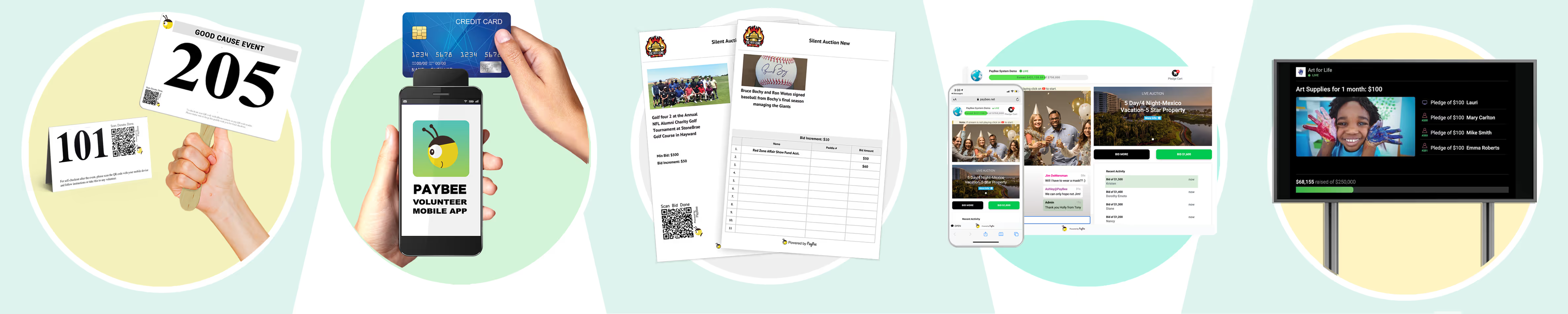
Progress is being shared more openly. A simple goal chart, running total, or quick update in a group chat keeps energy up. Youth stay engaged when they can see momentum, and supporters are more likely to give again when progress is visible. Platforms like Paybee stand out here with features like live goal thermometers, personal fundraising pages for each youth participant, and easy real-time tracking — all with no upfront costs or tech headaches, so kids and teens can focus on the cause while seeing the impact build right in front of them.
That’s the common thread. In 2025, youth fundraising ideas tend to work best when the plan is easy to join, the purpose is clear, and progress stays visible throughout.
Overcoming Challenges in Youth Fundraising Ideas
Every youth fundraiser hits a few pressure points once it’s underway. Groups that handle those moments well usually expect a couple of bumps in the road instead of assuming everything will run exactly as planned.
Make sure the goal is clear to youth
Participation often depends on how well kids and teens understand the goal. When they know where the money’s going and why it matters, effort tends to last longer. Involving them early and letting them help shape the fundraiser builds ownership instead of obligation.
Be realistic about time
Time is usually the tightest constraint. School schedules, sports, and family commitments leave little room for long or open-ended campaigns. Fundraisers with a clear start and finish are easier for families to commit to and easier for youth to stay focused on.
Plan for outdoor unknowns
Outdoor events bring energy and visibility, but they also bring uncertainty. Weather changes, space issues, and last-minute conflicts happen. Groups that think through a simple backup plan ahead of time usually handle those moments with less stress.
Keep costs predictable
Upfront costs are another common concern. Inventory-based fundraisers and venue reservations can feel risky, especially for smaller groups. Many organizations lean toward low-cost options so the focus stays on participation instead of covering expenses.
Be mindful of supporter fatigue
Supporters see plenty of fundraising requests throughout the year. What makes a difference isn’t repetition, but clarity. When the purpose is specific and progress is visible, people understand why they’re being asked and what their support contributes to.
Share responsibility to avoid burnout
Burnout shows up when too much responsibility sits with too few people. Fundraisers run more smoothly when tasks are shared and expectations are clear. Youth handle roles better when they’re manageable. Adults do better when they guide instead of carrying every detail.
Look beyond the final number
Success isn’t just the total raised. It includes how many youth stayed involved, how smoothly the event ran, and what the group learned. Talking through what worked makes the next fundraiser easier to plan and improve.
Stay flexible so the fundraiser stays repeatable
When challenges are expected rather than avoided, fundraising feels more manageable. Flexibility keeps small issues from turning into setbacks and makes the effort easier to repeat next time.
Conclusion
Youth fundraising ideas work best when they fit into real life instead of competing with it. When an activity makes sense for the age of the youth involved, respects family schedules, and has a clear purpose, people are more willing to get involved.
Groups that see steady results usually keep things simple. Kids understand what they’re working toward. Supporters know how to help. Progress is easy to follow. That clarity keeps energy up and keeps fundraising from feeling like a drain.
Starting small is often the right move. A straightforward car wash, walk-a-thon, or service project gives everyone space to learn what works without much pressure. Those early experiences build confidence within the group and trust with supporters.
Youth involvement continues to make the biggest difference. When kids and teens help choose the idea, talk about it with others, and watch progress build, the fundraiser feels like something they’re part of, not something being done to them. Tools like Paybee make this even easier — with personal pages for each youth to own their outreach, live progress updates that keep everyone excited, and seamless donation handling that lets the focus stay on the kids and the cause, not the tech.
If you’re getting ready to start, think of it less like a plan and more like a conversation. A few things usually help:
- Be clear about what you’re raising money for, even if the goal is simple
- Pick something your group can picture themselves doing
- Give the fundraiser a clear start and end so it doesn’t drag on
- Let youth see progress as it happens, even small updates matter
- Share how it went when it’s over, people like knowing how it turned out
None of this has to be perfect. Most groups figure it out by doing and adjusting along the way. If something feels heavy, that’s useful information to put in your pocket for next time.
You’re allowed to start with what feels manageable and build from there. That’s how most successful youth fundraisers begin.
Frequently Asked Questions About Youth Fundraising Ideas
What are some good youth fundraising ideas if we’re just getting started?
If your group is newer to fundraising, familiar ideas usually work best. Car washes, bake sales, walk-a-thons, and read-a-thons are easy to explain and easy for youth to participate in. Families understand what they’re supporting, which helps with early buy-in.
What if we need to raise money quickly without upfront costs?
Service-based fundraisers are often the easiest place to start. Yard work, babysitting events, pet care, or a short online campaign don’t require inventory or advance spending. They rely more on time and effort, which can work well when budgets are tight.
Do online youth fundraisers actually work?
They can, especially when they feel personal. Online fundraisers tend to perform better when individual youth share the campaign directly with people they know and when there’s a clear end date. Short, focused campaigns usually get more traction than long, open ones.
Which fundraising ideas work well in school settings?
Schools often do well with fundraisers that fit naturally into the day or involve movement or learning. Read-a-thons, walk-a-thons, fun runs, bingo nights, and movie nights are all fairly easy to manage and let students participate in different ways.
What fundraising ideas tend to work for church or community youth groups?
Groups with strong built-in communities often see good results from service-based or family-centered events. Babysitting nights, yard work fundraisers, restaurant nights, and community cleanups tend to feel natural and get steady support.
What’s changing about youth fundraising right now?
Many groups are leaning toward simpler, more flexible fundraisers. Hybrid events, low-cost options, and youth-led promotion are becoming more common. There’s also more focus on choosing ideas that fit into busy schedules rather than trying to compete with them.
Start Fundraising
 Paybee
Paybee is the leader in nonprofit fundraising events with tools for virtual, hybrid and in-person events.