


Silent Auction Best Practices for Nonprofits
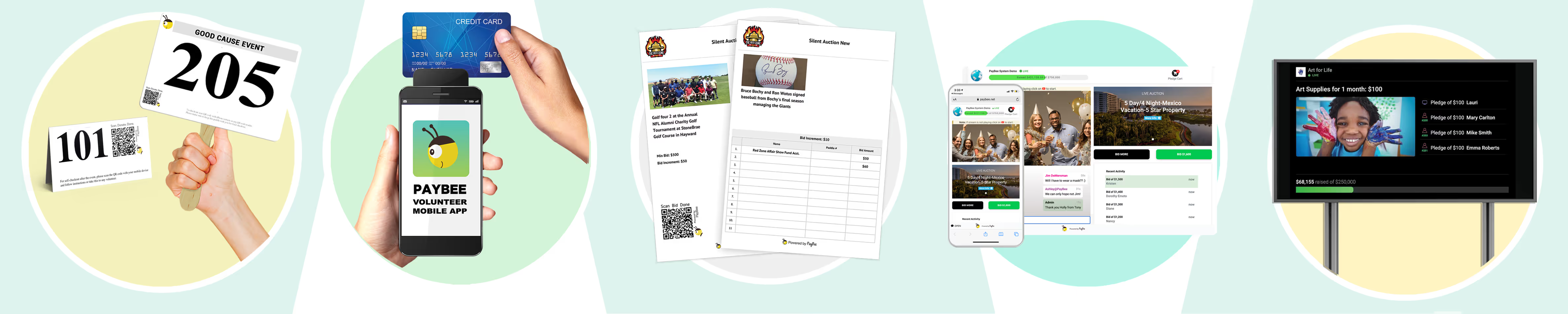
Silent auctions are a classic fundraising type where the guest bids for an item offered by your organization. During the event, bidders compete for the items through a silent auction format, usually by recording their bid amount to a bid sheet associated with each item. At the conclusion of the auction, the highest bidder is awarded the item and your organization receives the proceeds.
What are the most effective best practices for running a successful nonprofit silent auction?Running a highly profitable silent auction requires an organized approach to donor psychology, item selection, and event logistics. By ditching outdated manual tracking, setting strategic opening bids, and utilizing integrated mobile software, nonprofits can completely remove bidding friction, trigger friendly competition, and significantly increase their final fundraising totals.
Key Takeaways
- Curate, Don't Clutter: Avoid overwhelming your guests with too many items; focus on a curated selection of unique experiences and high-demand packages tailored specifically to your audience's spending capacity.
- Master the Math of Minimums: Set your starting bids strictly at 30% to 40% of the item's fair market value, and set minimum bid increments at 10% to 15% of that value to keep the bidding momentum moving upward.
- Remove Physical Bottlenecks: Replace paper bid sheets with mobile bidding technology so guests can track their items, receive instant outbid alerts, and place new bids from anywhere in the room without crowding tables.
- Automate the Night's End: Prevent long, frustrating lines at the conclusion of your event by using an all-in-one software platform that automatically charges credit cards on file and emails instant tax receipts.
This fundraising strategy has proven effective over time and helps supplement donations at many of your favorite fundraising events, including cocktail fundraisers, galas, school events, etc. However, for this fundraising activity to be successful, it needs a lot of planning.

To host a successful silent auction, there are several silent auction best practices that you need to follow.
- Set Clear Goals and Guidelines
Like other important events, you must establish goals and guidelines before you go into the event or planning. It’s important to keep in mind the goals of your event, the constraints, and necessities while also making sure your team is able to collaborate effectively and execute your plan.
To best prepare for your silent auction, try to review data from past events and make effective use of that very valuable information. For example, how many people typically attend your events? How much did you raise in the previous events? This information can help establish ambitious but achievable goals as well as provide insights on how to execute that plan.
- Create a Procurement Team
If you’re going to achieve your silent auction goals, you need to auction items that wow your guests, the type of items your guest can’t live without. To do this, you need to create a team that will be responsible for soliciting auction items. Plan for between 9-12 months to procure items prior to the event. If you need help sourcing items, there are many companies that partner with Paybee and specialize in providing auction items on consignment for your organization.
Some of the attributes to look out for when creating a procurement team are:
● Confidence and willingness to ask.
● Network and connection.
● Level of organization
● Availability
Look to solicit desirable and unique items that don’t cost too much upfront to your organization. Try to reach out to local organizations such as professional sports teams for donated items. Remember, the success of your silent auction and the amount of money you raise depends largely on this team. Choose your procurement team carefully and be vigilant in trying to procure as many donated items as possible.
- Identify the best items.
Your fundraising is built around auctioning items, so it’s vital to display the best possible items out there. However, you must keep your target audience in mind. It’s not enough that the auction item is amazing to you; but will your supporters see it the same way?
It’s essential to know your audience and find out as much as you can about them. Then you can glean inwights from this knowledge to determine what types of items will have the most success at your event. Some of the general characteristics of an “amazing” item are:
● The item aligns with the audience’s interests.
● The item falls into the general price range of your supporters.
● The item offers something unique.
● The item leverages current trends
Procuring items with these characteristics, coupled with the knowledge of your audience, will help you gather truly amazing items.
- Advertise the items
You’ll be limiting the appeal of your items if you fail to advertise them before the event. A big part of the success if your event will depend on your pre-event outreach to drum up excitement for and ultimately sell tickets to the event. Don’t forget to include your silent auction items preview included in your initial outreach. This allows your audience to come with intent and prepares them mentally as well as financially for a bidding tug-of-war, compared to when they attend the auction without knowing what to expect.
Seeing the item in advance incentivizes your donors to attend the auction and to come with excitement. They won’t want to miss out on the possibility of going back home with one of those items. Leverage this fact and advertise thoroughly. Be sure to include all relevant details that supporters need for the auction in your advertisements.
- Write compelling donation request letters.
A best practice you must not overlook is writing donation request letters. These letters are crucial to building your auction. It introduces to the recipients – individuals and organizations – that you’re organizing a silent auction, need amazing items, and visibility for auction donors.
Some of the things to do with your donation request letters are:
● Address it to the decision-makers.
● Acknowledge the donor relationship.
● Use a CTA
● Explain the reason or benefit of the fundraiser
● Invite them
● Thank them for their support
● Include a donation form.
Conclusion
These best practices will make the difference between a successful silent auction and a failed one. Please keep in mind the tips mentioned in this article to give your silent auction campaign the best chance of success.

Author Bio
Samuel Matthews works as a journalist and novelist, currently occupying a role at pro essay writing service. He lives in Manchester, New York and loves to learn new things and meet different people. His hobbies include travel, sports, and drumming.
Start Fundraising
 Samuel Matthews
His name is Samuel Matthews, and he works for pro essay writing service. He is 33, and lives in Manchester. He worked as a journalist and wrote his detective story. He loves to learn something new and meet different people. His hobbies are travel, sports, and drumming.


