



PayBee vs Auctria (2026): Fees, Features, and the Best Fit for Your Auction or Gala
Intro + TL;DR verdict
Trying to decide between PayBee and Auctria for your next fundraiser? Both are platforms that run silent, live and online auctions, both offer mobile bidding, fund-a-need, and check-in and checkout tools, and both support in person, virtual, and hybrid events, in their own ways. The bottom line: Auctria wins based on budget and flexibility. PayBee wins based on its built-in livestreaming tools and full service support. What’s best for your organization will depend on your team, budget and event.
If your main priority is “lowest cost and we can do the rest ourselves”, then Auctria should be a better fit. If your team is more “let’s pay extra and focus our time on other things”, PayBee is for you.
PayBee vs Auctria at a Glance
What is PayBee?
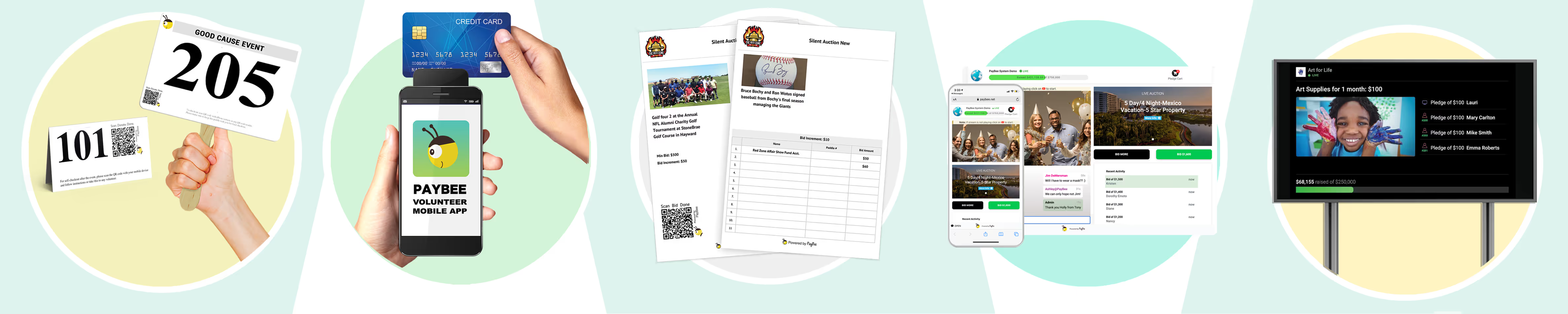
PayBee is an all-in-one fundraising and events platform for nonprofits that want their auction software, event ticketing, donations, and fundraising tools all together in one place. Its platform supports silent and live auctions, fund-a-need campaigns, mobile checkout (tap-to-pay), raffles, and donation pages for in person, online, and hybrid events.
Best for: Teams that want to take advantage of built-in livestreaming capabilities and that want thesoftwaretodomostoftheheavylifting
What is Auctria?
Auctria is, by design, an auction software that provides everything an organization needs to run silent, live, and online auctions. Their toolset includes mobile bidding, paddle raises, raffles, sponsorships, and event-day fundraising.
The platform also combines auction management, ticketing, donations, and tools like tap-to-pay checkout in a single system.
Best for: Nonprofits and similar organizations with tighter budgets that run auction focused fundraisers, and are comfortable with DIY tools and flexibility when it comes to running an event themselves.
Pricing Compared (honest math)
In a side-by-side comparison, Auctria cost less than PayBee for your typical auction forward events. The difference comes through how they approach their pricing models:
Auctria has tiered annual subscription plans and charges a small platform fee per event.
Auctria pricing model: Annual subscription cost plus transaction fee on electronic payments, with various tiers depending on your organization's annual event income.
- Explorer: Free for organizations with annual event income up to 10,000/year.
- Emerald: $375/year for organizations making $10K-$50K annual event income.
- Diamond: $750/year for organizations with unlimited income.
- Transaction fee: 0.25%-1% + Stripe processor fee; $0 on cash and checks.
PayBee pricing model: 2% flat fee on all electronic transactions plus card processing fee (i.e. Stripe 2.9% + $0.30); no charge for cash or check. There is no monthly subscription requirement, but nonprofits can choose to add the $599 premium plan, which includes white-glove support and unlimited events for two years. On-site event support can also be provided for an additional fee.
Working example price comparison
Say your nonprofit hosts a fundraiser and brings in $50,000, mostly by card:
- Auctria Diamond ($750/yr, 0.25% platform fee): $750 + $125= $875
- PayBee: (2% platform fee) = $1000.
While less common, there are instances when PayBee comes out cheaper than Auctria. The lines cross when it comes to the cash/card mix. PayBee’s platform doesn’t claim lower cost, it’s based on more features and support.
Feature-by-Feature Comparison
Price isn’t everything. Both platforms are strong when it comes to their profile of auction tools, with each one supporting silent, live, and online auctions through mobile bidding, fund-a-need, ticketing, and tap-to-pay at checkout. The main differences come down to livestreaming, reporting, and the level of support the platform gives.
Auction types (silent, live, online)
- Both platforms are capable of handling the main auction formats used by nonprofits with mobile and online bidding options.
- Auctria has more detailed control over things like catalogs, text-to-bid, soft-close extensions, and bid-step rules. Basically DIY management.
- PayBee’s approach integrates livestreaming, fundraising display, pledge drives, and donation pages, bringing it all together on one dashboard.
Mobile bidding
- Both platforms offer ways for supporters to place their bids from their mobile devices.
- PayBee: Browser based bidding through any mobile browser
- Auctria: Mobile web bidding, an optional bidding app on iOS and Android, and text-to-bid functionality.
Fund-a-Need/Paddle Raise
- Both platforms support paddle raise fundraising with mobile giving and checkout allowing nonprofits to collect donations alongside auctions or other fundraising activities.
- PayBee integrates appeals with its fundraising display and auction tools, keeping bids, donations, and totals on the same screen during the entire program.
- Auctria includes appeals with its auction, donation, and event management features, tie to reporting and checkout.
Ticketing & Registration
- Online ticketing, registration, and event websites are offered by both platforms.
- Auctria adds table management and more detailed control over traditional event setups, i.e. table maps and seating assignments.
- PayBee ties in ticketing with its auction, donation, and hybrid-gala tools, so all attendee records stay together in one place.
Check-in, Checkout, & Tap-to-pay
- Both platforms are mobile friendly and can support digital check-in, checkout, and mobile payment options.
- PayBee: Payments are handled in the same system and bids and donations, so your team works in one screen.
- Auctria: These are accessed via the Admin app, which volunteers use for scanning, charging, and on-site reconciliation.
Livestreaming
This is where the two platforms start to vary:
- PayBee’s platform has built-in live streaming.
- Auctria has the capability to embed videos from another streaming app, but organizers need to set it up and run it themselves, separate from the platform.
Virtual & Hybrid Galas
- PayBee: Built in streaming, live chat, and real-time total display seamlessly connects in person and remote audiences.
- Auctria: Supports online bidding and donations, but handling AV, streaming, and deciding the run of show are the organizer’s responsibility.
Reporting
- Auctria comes with over 100+ customizable report templates that cover topics like items, donors, participants, tickets, sponsorships, finances. Reports can be filtered with customizable column and exported.
- PayBee’s reporting tools cover things like completed/pending transactions, donor history, campaign activity, and corporate matching.
Catalog & Item Management
- Both platforms let you add items, descriptions, images, and starting bids.
- PayBee covers the basic essentials needed for fundraising displays.
- Auctria adds on item grouping, bid-step rules, soft-close extensions and multiple ways for bidders to browse and bid.
Livestreaming & Hybrid Galas (the big differentiator)
How the two platforms approach livestreaming and ultimately hybrid galas is one of the biggest differentiators when discussing PayBee v. Auctria.
PayBee has built-in livestreaming directly connecting remote audiences to live auctions, paddle raises, or whatever fundraising activity is going on during the event. Live chat and real time fundraising totals keep everyone connected by ensuring both in-person and virtual guests are looking at the same screen.
Auctria has the tools for virtual auctions and bidding, but video streaming is handled through an outside platform like YouTube or Vimeo. Organizers are responsible for setting up and running the stream separate from the platform
This difference is mostly felt in hybrid galas. With Auctria, your team is in charge of all of the production details: streaming links, run-of-shown, who controls the audio and video, and how bidders see the program. PayBee includes it within its event flow software. So you launch the campaign and connect your stream, and the platform coordinates the rest.
Setup & Support
How the two platforms approach set up and support is another place where they differ.
Auctria is designed for self managing teams capable of configuring events themselves. Organizations have the option to pay for additional support packages.
- Auctria Launch ($499 per event): includes three Zoom meetings and ongoing support
- Launch Advantage ($749): includes guest management, a training call, and both pre- and post event sessions.
Support is delivered via Zoom and includes a 6-hour emergency phone window the night of the event.
PayBee takes a more hands on approach. It has standard platform support included for all users, with an optional Premium Events plan that offers white-glove support.
- Premium Events Plan ($599): White glove support for unlimited events for 2 years. Includes guest management, training, and post event reporting.
- On-site support is available for an additional fee.
Ease of Use & Modern UX
Auctria reviews describe the platform as ‘capable’, but say the interface can sometimes feel dated and clunky. They also note that the platform has a learning curve that becomes straightforward once you get used to it.
PayBee’s guided approach uses a streamlined interface that is designed to make setting up and managing events easier.
More experienced auction volunteers who can handle the extensive controls might find Auctria’s learning curve to be a reasonable trade off. Teams that prefer a more guided experience might find PayBee easier to navigate.
Ratings as of 2026
PayBee
Auctria
Best For…
The right fundraising platform for your fundraiser will come down to three things: Your event model, your team’s capacity, and how much you value control over production.
Choose PayBee if…
- You’d rather pay extra to coordinate less moving parts on event night.
- You’re running a hybrid event and it’s important that your audience at home can have the same experience as this in attendance, at the same time.
- You're running a smaller event where the 2% fee and revenue level will beat having to pay subscription fee
Choose Auctria if…
- You want more detailed control and deeper reporting.
- You’re budget conscious and comfortable enough running the show yourself.
- You have multiple events planned, or larger fundraisers where a flat annual subscription will costs less than a percentage fee.
Where Auctria may be the better choice
Auctria tends to fit teams that prioritize budget, have detailed visions for how their auction should run, appreciate the flexibility, and have the experience and knowledge needed to run and event themselves.
Auctria may be a better choice if…
You want to keep costs as low as possible.
With tiered annual subscriptions and low platform fees on electronic payments, Auctria costs less in the long run for larger or cash/check heavy events— especially if your organization qualifies for the free Explorer plan.
Your team is comfortable running the show.
The platform’s entire foundation is built on its self-managed setup. If you have a team of experienced auction volunteers that don’t need a lot of support, paying more for a high touch service model might not be valuable enough for you to justify the extra costs.
You want extensive control over auction configuration.
Auctria gives its users detailed control over their auction setup and building, including elements like maximum bids, extensions, item grouping, and access and control across multiple bidding channels. Teams managing large or complicated catalogs often prefer having the flexibility over having it done for them.
Reporting is a big deal for your organization.
Auctria’s 100+ customizable templates cover: items, donors, bidders, donations, finances, tickets, tables, sponsors, and raffles along with filtering, tagging, column customization, and exports— usefulness for sponsor recaps, item performance analysis, and more.
Livestream isn’t a dealbreaker.
If your event is in-person or you already use a separate video platform, the tool package provided by Auctria is enough to support the bidding and fundraising side of things. While they don’t provide the same livestreaming tools, Auctria’s platform lets users embed the technology from an outside source.
Switching from Auctria to PayBee
Some teams move from Auctria to PayBee after finding they want a more managed event experience, others switch for the built-in streaming tools. Whatever the reason, setup and migration is straightforward thanks to CSV exporting/importing.
How to migrate from Auctria to PayBee:
- Export from Auctria: Start by pulling your item catalogs and guest/donor lists using Auctria’s reporting and exporting tools.
- Import to PayBee: Upload CSVs to PayBee. This recreates items (descriptions, photos, starting bids) and maps guest fields like name, email, phone, table/seat.
- Rebuild rules: Some things like bid steps, soft-close, and item grouping don’t automatically carry over. They’ll need to be configured in PayBee’s setup.
- Test the transfer before going live: Double check tax and tip rules, payment methods, and checkout wording. Also run a test transaction and walk-through with volunteers.
Important Caveat
If your team depends on the detailed auction controls or many report templates provided by Auctria, make sure that PayBee’s settings will suit your needs before beginning the transfer process.
FAQ
- Which is cheaper — Auctria or PayBee?
While ultimately it depends on overall volume and card-vs-cash mix, Auctria is generally cheaper than PayBee because it doesn’t charge a performance fee. It instead uses tiered annual subscriptions and a small platform fee (0.25%-1%) on electronic transactions, with $0 on cash or check. PayBee charges a flat 2%on all electronic payments.
- How much does Auctria cost?
Auctria offers three tiered annual plans, and cost varies depending on annual event income: Explorer (free for up to $10k event income; 1% platform fee), Emerald ($375/yr for $10K-$50K; 0.5%), and Diamond ($750/yr for over $50K; 0.25% platform fee). All tiers add a card processing fee.
- Does Auctria offer livestreaming?
Livestreaming is not built into the platform When using Auctria, video livestreaming must be arranged separately through an outside app like YouTube or Vimeo.
- Do you need an app to use Auctria?
The app is optional. Similar to PayBee, participants are able to bid from a standard mobile web browser. There is a separate Admin app that volunteers use for check in, check out and tap-to-pay.
- Can I DIY my auction with Auctria?
Absolutely! Auctria is known for its affordable, self-service auction management, making it a good fit for experienced, hands on teams that value control over lower fees. Consider PayBee if you’d like a more managed experience.
- What is the best alternative to Auctria?
PayBee is the top Auctria alternative for organizations that want a managed, full-service platform with built in livestreaming. Nonprofits also look at OneCause, Handbid, Givebutter, and RallyUp. The best software for you will depend on what you prioritize: managed service and livestreaming, deep auction controls, or CRM integrations.
Conclusion + CTA
There is no obvious, standout winner when it comes to the PayBee vs. Auctria comparison. Both can take care of everything a nonprofit needs to run an auction, including bidding, donations, ticketing, and event day payments.
Auctria can be a better fit for teams that prioritize low costs, prefer flexibility and more detailed control over their auctions, and need detailed reports.
But Auctria isn’t just a cheaper version of PayBee. PayBee can be a better choice for nonprofits that want a more managed experience and are willing to pay more to have livestreaming and hands on support.
Before making the switch, compare costs, features, and level of support needed against your next event. The right choice will come down to how your organization manages events, and what work you want your volunteers to focus their time and energy on.
Ready to see how PayBee fits your fundraising goals?
Start Fundraising
 Jamie Martin
Jamie Martin is a freelance content writer who helps nonprofits and fundraising platforms turn ideas into results. From SEO blog posts and guides to step-by-step tutorials and creative campaign content, she creates writing that attracts audiences, drives engagement, and converts readers into donors and users.


