

Nonprofit Management Resources
Whether you’re just starting on your journey as a nonprofit, or you're a group of seasoned professionals that have been in the game for years, one thing is for certain: you probably already know how intricate running a charity organization can be. Financial management, staff, looking at the big picture while running day to day functions. And, according to experts, the already precarious climate is only going to get more complex. With leaders facing challenges like staff retention, funding shifts, and changing regulations, the right systems can be a priceless asset for any charitable organization looking to make any real impact in this day and age.
Thankfully, you are not alone. There is an infinite number of support tools out there made especially for those operating in the nonprofit field. For leaders, staff, and governance team members alike, these practical support tools are invaluable. From practical tools to professional guides to training programs and workshops, there are nonprofit management tools that can help you standardize all aspects of your organization's operation. Everyday, more leaders are turning to these systems to help them guide their teams and reduce operational friction. These solutions are made specifically for nonprofits of any shape or size. Regardless of your organization's current operating capacity, every organization benefits from implementing these tools and systems with your current ones.
We are going to break everything down in this comprehensive guide, so you can walk away knowing exactly what options are out there. We’ll also discuss the best strategies to use to get the most out of these support tools, and look at what trends are being predicted for 2026 and beyond.
As nonprofits search for new ways to take their team to the next level, using the right tools can truly make or break an organization. Here at Paybee, our team are experts in all things nonprofits. If you’re ready to dive in, message us today and let us explain how we can make your next move your best move.
A Guide to Key Nonprofit Resources and Solutions
Nonprofit management solutions are a vast category of tools, guides, and support systems designed to help nonprofits govern effectively, manage their operations, and support leadership decision making. These tools can be tactical, like task lists, templates, and worksheets, that your team can use on a daily operational level. They can also be strategic, like self assessments, planning frameworks, and financial planning models, that help leaders make the right decisions and affect the long term sustainability of your mission.
Combined, these tools are the backbone of nonprofit organizations. While they don’t change the way you deliver your mission, they form all of the intricate pieces that let all of that work happen in the first place. Things like how governance is structured, overseeing finances, creating internal processes, and developing leadership are all supported by these systems
Used by staff, executives, and trustees across every department of an organization, these assets come in all different shapes and formats. You’ll find simple downloadable tools for everyday work, guided workshops and training, comprehensive software programs, and self-paced classes. Some solutions are free like online webinars, and some, like consulting services,are worth fitting into the budget.
These toolkits are made specifically for nonprofits. Meaning every single one is tailored to answer the complicated questions specific to this very unique sector. You don’t get a one sized fits all tool, you get something made specifically for what you need.
Whether a small church group or a large, global scale operation, there are tools created for all nonprofits, regardless of size, budget, or operating model. Small organizations look for downloadable toolkits to fill in where limited staff and tight budgets cause them to fall short. Administrative tasks and processes are easily streamlined, without having to pay more in staff costs. Large organizations take advantage of guides and frameworks to help them establish cohesive policies and practices throughout their entire organization.
There are five major types of categories nonprofits use these solutions in.
- Governance and Board Management – Systems that aid governance structures and frameworks, director member roles and responsibilities, oversight responsibilities, and leadership guidance.
- Strategic Planning and Operations – Tools that aid in running the business: internal processes, planning frameworks and guides, and operational alignment.
- Financial and Fundraising Management – Assistance dedicated to financial management, fundraising, budgeting, and revenue planning.
- Staff and Volunteer development – Tools like training materials and other workforce related guidance that supports staff and managing volunteers.
- Compliance, Legal, and Risk – Designed to help organizations avoid compliance issues, these solutions help keep track of legal obligations, risk management, and provide policy references and guidance.
These categories form the basic foundation of the resources available for nonprofit management. Having a general understanding of them shows how extensive of a guidace network is out there.
Essential Nonprofit Management Resources by Category
With the infinite number of solutions available with a quick google search, finding them isn't the hard part., it’s finding out which ones are actually worth your time. Decision fatigue, lost time, and wasted money are the most common frustrations leaders have when trying to find the right tools and systems for their organization. Knowing where to start and which tools will actually facilitate your goals will save you a headache right from the start.
This section highlights some of the most widely used platforms across the industry today. Each one is relevant to a specific function, giving you a practical jumping off point in your search for credible assistance that has already been proven successful by other charities.
Governance & Board Leadership
- Boardsource - A leading, national organization known for providing executive level education and setting governance standards. They offer a mix of both free and paid tools, guides, and training programs used by trustees and executive leaders.
- National Council for Nonprofits – An organization specializing in governance and compliance guidance for nonprofits. Most of their educational supports are free, and they are frequently referenced for the most up to date advice on trustee responsibilities and managing accountability.
- BoardEffect – A paid, leadership team management software platform that lets you centralize all of your important trustee documents, meeting notes, and communication logs in order keep operations and workflows organized.
- Independent Sector – This coalition and research group focuses on ethics, accountability, and public policy. They have both free and paid offerings that are typically used in higher-level governance.
- State Nonprofit Association – Geared towards State-level organizations, they provide executive oversight guidance through free and paid offerings that's specifically tailored to local regulations, varying by state.
Strategic Planning & Operations
- Bridgespan Group – A nonprofit research group most commonly used to provide guidance in strategic planning cycles. They specialize in both free and paid planning tools, operational how-to guides and structures, and professional consultancy.
- Nonprofit Finance Fund – Planning tools used for operational support, accounting, analyzing revenue mix, establishing cost structures, and setting your charity up for long-term financial sustainability.
- Leap Ambassadors Community – Primarily free strategy and performance management aids for nonprofits looking to improve their planning process and internal decision making capabilities.
- Propel Nonprofits - Free and paid tools for groups looking to improve strategy, operational systems, and internal organizational infrastructure.
- Stanford Social Innovation Review – Commonly referenced by those looking to gain sector insights and different planning perspectives, they publish research-based analyses on strategy, leadership and organizational operations.
Financial & Fundraising Management
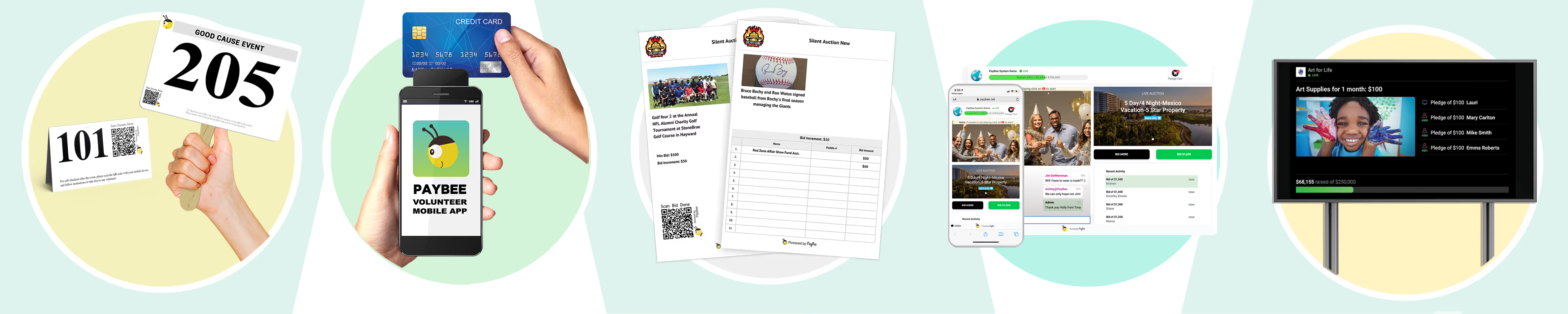
- Paybee – A fundraising and payment platform designed to help organizations streamline fundraising operations. They provide integrated tools for managing events, donations, and donor engagement.
- Candid – This platform provides comprehensive fundraising data, including grant research and in depth donor insights and analysis. Used by those looking for information on nonprofit development planning and tips on financial strategy.
- Nonprofit Finance Fund – Tools for financial planning, budgeting, and measuring sustainability by bringing together organizational strategy with financial realities.
- Association of Fundraising Professionals – A group supporting professional development by providing research, training, and guidance to help staff improve fundraising strategy
- CharityHowTo – A source for online courses and webinars that specialize in the best fundraising techniques, helping staff develop campaign management skills, and building donor relationships.
Staff & Volunteer Development
- NonprofitReady.Org – Free virtual courses to help staff build skills in areas like nonprofit management, operations, and leadership.
- Center for Creative Leadership – They provide executive development programs teaching things like management and decision making skills, all tailored specifically to nonprofit teams
- Council of Nonprofits – Offers learning programs and educational solutions in all things management.
- VolunteerMatch Learning Center – Teachings and practical guidance on how to recruit, manage, and retain volunteers.
- Idealist – Career and senior management content geared towards professionals, so that staff and emerging leaders can expand skills and explore new opportunities.
Compliance, Legal, & Risk
- National Council of Nonprofits – They provide guidance on legal requirements, regulatory compliance, and risk management.
- IRS Charities and Nonprofits – Federal guidance on tax-exempt status, filings and what your reporting obligations are.
- State Attorneys General Offices – Registration, reporting and compliance information specific by state.
- Pro Bono Legal Service & Clinics – Free or low cost legal aid from law firms and legal aid organizations.
This list, though exhaustive, is only a fraction of what can be found out there. While every organization will have its own set of unique needs, every platform on this list will give you assistance tools and systems to help your team operate more efficiently, equipping staff with specialized skills in multiple areas, and make sure that leadership is managing risk effectively.
Why These Tools Matter For Your Nonprofit
These management solutions aren’t just reference materials, they are all of the cogs and wheels that keeps your nonprofit functioning. They can completely shape how your organization operates, how your management team leads, and how your group can grow sustainably. By strengthening your nonprofit’s internal capacity, you can improve relationships with funders and sponsors, better positioning your team to make important strides in your cause.
- Organizations are able to increase their operating capacity.
When you provide leaders and staff members with the right training, frameworks, and workflows. Clear systems create consistency across teams and create a consistent foundation that allows organizations to operate confidently in moments of both rain and shine.
- The entire team becomes equipped with more effective decision making capabilities.
There is no need to reinvent the wheel. Proven benchmarks, tested models, and real examples lay a guide that helps you make informed and strategic choices. Teams don’t have to rely on instinct and guess work. They can make decisions based on hard data and facts.
- Operational efficiency improves across all departments.
Toolkits, prebuilt templates, and repeatable processes to save streamline daily operations by standardizing workflows and reducing manual tasks. Staff can spend less time on administrative work, and more time focusing on activities that actually move the mission forward.
- Credibility increases with your founders and other stakeholders
Professional management and financial processes show that your organization is reliable and ready to take on serious work. Clear reporting templates, budget reporting, and financial templates show partners, executive team members, and donors that your organization is capable of effectively managing funds, securing their trust.
- Your organization can set itself up for long-term, sustainable success
Charities that actively use organizational supports are better positioned to adapt and scale their operations during periods of uncertainty. For example, strategy and budgeting tools can help you manage cash flows in order to prepare for slow fundraising periods in advance.
These tools aren’t just one-time quick fixes. They are all long-term, strategic assets. They strengthen your entire leadership team, improve internal operational efficiency, and help your organization function with more confidence. By putting consistent systems in place, you create a team that’s better equipped to plan ahead and adapt to any changes that may come their way.
Getting Started With Nonprofit Support Tools
Without a clear approach, even the most advanced tools won’t get you far. Using these guides effectively means sourcing from credible sources, focusing only on systems that actually fit your organizations needs, and implementing them smartly.
Step 1: Assess your organizations needs before you choose your solutions
Not every tool will work for every organization. Avoid wasting time and money by only using systems that match your priorities. Use benchmark tools to analyze where your organization may have gaps in governance, operations, leadership, and compliance. Then, decide which of those are immediate issues that affect daily operations, and which ones are related to longer term needs. Work with executive team members or other leaders on this one. The best picture will be painted by those with different experiences and points of view. This way you’re sure to avoid ineffective tools that don't actually match your needs.
Step 2: Find credible sources specific to the sector
When you start your search, be sure to only look at sources that focus on nonprofits, not general businesses. Solutions should be regularly updated, showing the most current regulations and practices, and providers should be experts in their fields. Avoid non-expert sources or materials that were made for a general audience, in order to reduce the risk of implementing the wrong practices.
Step 3: Match tools to your nonprofit’s size and stage
Organizations in their beginning stages should focus more on tools that work to establish governance structures and build core systems. More established nonprofits should prioritize tools that help them adopt more advanced, complicated strategies and better performance frameworks. This way, you don’t end up with systems that are neither too complex nor not mature enough for your needs.
Step 4: Try out free or low cost tools first
Rather than jumping right in and committing to a service, start off with free toolkits and workflows to test how relevant they are to you. Try a test sample with a single team or department before integrating a brand new system throughout the entire organization. This way, you can evaluate how useful something will be without sacrificing too much time or money.
Step 5: Create a clear implementation strategy.
One of the biggest pitfalls organizations face is losing momentum after initiation and reverting back to the way things were before. When you start out, make sure you have a clear idea of what you want the outcome to be. Then create a timeline using realistic benchmarks that you can continuously return to measure progress over time. Finally, assign team members different responsibilities for each initiative in order to avoid delays.
Step 6: Review and make regular adjustments
Periodically reassess your systems, for example during annual planning meetings or major leadership changes. If you find tools that no longer reflect the way your nonprofit operates, make sure to retire them and implement something new. Staff members are a great resource because they use these systems every day. Don't ignore their feedback.
At the end of the day, how effective these solutions are for your organization largely depends on how you put them to use. Having the tools is only a fraction of the work. By testing, integrating, and revisiting systems put in place, you can build a foundation that will power your work for years to come.
How Nonprofit Solutions Are Evolving in 2026
As the nonprofit sector continues to evolve, so do the systems and tools used to it. In 2026, we see a reflection of new operational realities, leadership models shifting, and a growing focus on more long-term sustainability. Assets are adapting to let leaders make more data driven decisions. From smart reporting features to remote instructional programs, these tools are setting nonprofits up to anticipate challenges and build resilient organizations that are ready to meet the demands of tomorrow.
First off, we see Ai-powered processing appearing more often, even in the most basic tools. Organizations are using it as a way to assist staff in practical applications like creating reports, analyzing data, and sorting out day-to-day workflows and tasks. WIth teams under constant pressure to operate more efficiently, harnessing the power of AI allows them to do more without having to increase their operating capacity. As these features become the standard, we’ll see leaders paying more attention to data quality, tighter oversight, and AI processes aligning with organizational goals.
We are also seeing a growing emphasis on equity and inclusive practices in organizational structures and leadership models. Where DEI initiatives were once one-off trainings, today’s norm sees them being revisited often, by workers on every level of each department. Today’s operational tools are reflecting this shift, particularly in areas like governing body composition and decision making processes. Today’s tools show the importance of understanding power dynamics and how important diverse voices are represented when building equitable systems..
Hybrid leadership is an increasingly necessary skill in today’s environment. There are a growing number of management tools addressing topics like leadership, communication, and accountability in diverse environments. With remote and hybrid work continuing to be a standard part of the workforce, we see an increased focus in learning how to maintain cohesion in a team that's spread across different offices. These tools prioritize efficient communication, easy document and update sharing, and leadership strategies that keep teams on the same page across different digital spaces.
We see financial sustainability at the forefront of trends in the nonprofit industry this year. Solving immediate problems is no longer enough. Today's tools are allowing organizations to think realistically about their long term goals. By supporting scenario planning, more detailed financial oversight, and taking a realistic look at aids in relation to sustainable strategies, nonprofits can make the decisions that will continue to help them further down the road.
The final major trend we’re seeing is the emergence of these supports in formats that are more accessible and flexible than ever before. Up and coming tools place emphasis on things like on-demand access to workshops and guides, letting leaders and staff access the things they need when they need them. This shows that people are seeking assistance that fits into their day to day operations.
When looked at together, we see that the nonprofit industry tastes overall is turning towards tools that offer the most amount of practical and readily adaptive features. Rather than just chasing down the newest tools, nonprofits are taking more thoughtful and practical approaches. Following these trends will lead you straight to tools and guides that are both relevant and effective for you and your team.
Practical Solutions for Overcoming Roadblocks
Even a nonprofit doing everything right by the book will run into challenges that slow their progress. Compliance demands, growth hurdles, and the responsibilities that come along with leading a team all carry hurdles of their own that put a strain on both leaders and staff. Targeted leadership aids are there to provide practical solutions to these challenges. While you might not be able to avoid roadblocks all together, having the right systems in place can help make sure that you meet every one with confidence, keeping your entire operation from being completely derailed.
Financial and operational constraints
The biggest challenge met by every nonprofit at some point is figuring out how to do more with what little they have. There is never enough time, money, or helping hands in charity work, but that shouldn't hold you back from doing the work. Outsource where you can by taking advantage of tools like low cost learning programs and all-in-one platform solutions. This way, you can strengthen internal processes without bearing the brunt of upfront costs.
Preventing burnout and retaining quality staff
Heavy workloads and small teams lead straight to burned out staff members and a high turnover rate common in this sector. HR templates, leadership instruction guides, and workload planners help your organization establish clear employee roles. Implement smart tools to take over tasks where they can, like using AI for reporting and data collection. Together, these smart systems create healthier and more cohesive work environments.
Remaining compliant under complex regulations
Checklist, up to date compliance guides, and prebuilt frameworks help organizations navigate the challenging landscape of constantly changing regulations. Stay up to date with the latest information from reputable sources within the to make sure that your guidance is reflecting industry standards. Enlist various compliance tools to make it easier to track deadlines, standardize reporting processes, and reduce the risk of errors and oversights.
Gaps in leadership capabilities
It’s rare that all staff and trustee members come fully equipped with a wealth of perfectly curated knowledge concerning everything nonprofit. By enlisting leaders in development programs, providing governance based toolkits, and creating channels for outside caching, you can set forth clear expectations, strengthen oversight, and child confident leaders that are capable of making decisions without needing their hands held.
Troubles Scaling Efforts for growth
As your nonprofit grows, you’ll find your organization outpacing the systems that once may have seemed perfect. Processes that were perfect for a small team might seem inefficient once you gain more staff. Budget sheets might not be able to handle the same numbers once income streams become more diversified. Consistently audit operations and workflow guides to ensure that they are still relevant to your practices in order to make sure that processes and goals are growing alongside each other sustainably.
Almost every challenge that comes with running a nonprofit can be addressed with the right management tools. They aren't just good practices. These are targeted and proven solutions that are specific to making charitable operations run smoother. Organizations are tapping into these systems everyday, further highlighting how finding the right support can set you up for a lifetime of stability and growth.
How These Tools Deliver Results
Charities that consistently lean into targeted solutions report finding measurable improvements in all core areas pertaining to charity operations. The following examples show how using practical tools can translate into real, positive outcomes.
Strengthening Board Effectiveness
A small community based nonprofit had been struggling with their seven person board. No one knew their roles, which made participation hit or miss on a good day. They finally turned to Boardsource‘s self assessment surveys to see exactly where things were going wrong, finding major gaps in communication and committee oversight. Leaders used the platform’s governance guides to restructure. They were able to pull examples of formal policies and committee chargers, and add them directly into their own framework. Executive members finally knew what expectations for them were, and were more than happy to engage in long term planning and oversight.
Using self paced learning to standardize staff development
BrightPath Youth Network, a midsized youth development organization, found that frequent staff turnover left them with a team that was operating at different skill levels which made it hard to find consistency in any of their endeavors. To address these uneven skill levels (with a limited budget), they turned to NonprofitReady’s self paced courses. They encouraged their staff to complete skill building courses in nonprofit management, financial oversight, and fundraising basics. They also made these a one of their onboarding requirements, so all incoming volunteers would be equipped with the same information as those who had been there for a while. This approach not only reduced the need for expensive external training, it led to a cross team understanding of the core functions of a nonprofit, virtually turning the entire staff into experts in the field over a couple of weeks.
Creating Strategic Focus with planning toolkits
An organization called Greenway Health Access Alliance lacked a consistent planning process. It made it difficult for leaders to make smart decisions when crises arose, misaligned budgets, and left leadership unclear on what true priorities were. Someone suggested Bridgespan and their strategic toolkits that guide leaders through every step of a structured planning cycle. These frameworks let the organization identify which initiatives should take priority, while assessing the true capacity at which their organization could operate. They also learned how to connect their strategy to actual measurable outcomes. The organization strengthened its ability to articulate long-term direction, making quicker and wiser plans for their future
Frequently Asked Questions
What are the best nonprofit management resources?
Solutions should be specific to your charity's size, goals, and development stage. SOme of the current industry leaders are Paybee for fundraising, BoardSource for governance, the Bridgespan group for strategy, and NonprofitReady for instructing staff.
Where can I find free nonprofit management resources?
Most tools are easily available online. Websites like Candid and the National Council of Nonprofits all provide free support through things like toolkits, webinars, ready- made templates, and guides on fundraising, staff development, and operations.
What resources are available for nonprofit board management?
Board management tools define roles, set clear governance structures, and improve all around oversight. Tools like BoardEffect and Independent Sector are great for finding self assessment and guidance on ethics and accountability. These resources are great for any group looking to strengthen long term leadership council effectiveness.
How can nonprofit management resources help with fundraising?
Fundraising tools work to streamline operations, improve engagement with donors, and provide actionable insights. These guides all work to help maximize revenue while reducing administrative workloads.
Wrapping Up…
Nonprofit management aids are the backbone to any well running organization, From Paybee, to BoardSource, these tools all offer practical solutions for your nonprofits core functions: Strategic planning, governance and oversight, fundraising, staff development, and meeting regulation and compliance. When you take advantage of these valuable assets, any sized organization can begin taking steps that will streamline daily operations, help you make smarter decisions, and strengthen your capacity as a leader.
The benefits are obvious: Stronger boards, more engaged and productive staff, and an increase in operational efficiency, all of which help increase your chances of long term sustainability.
Looking ahead, the entire nonprofit industry will continue to evolve right alongside new technology, leadership practices, and new operational models. Things like AI, hybrid leadership skills, and flexible accessibility are all contributing to the evolution, making it easier than ever before to access guidance that fits your charities own unique needs. Things like scenario planning and financial sustainability are becoming the standard in any modern platform, showing that nonprofits’ goals underlined with smarter decision making in periods of uncertainty.
For those ready to take the leap, Paybee offers all in one tools specially made to support your team's growth. Head over to our site and see how strategic planning, compliance management, and fundraising tools can all work together to make your organization effective and sustainable. Contact us today to schedule a demo, and start leveraging all of the expert assistance that your nonprofit deserves.
Start Fundraising
 Jamie Martin
Jamie Martin is a freelance content writer who helps nonprofits and fundraising platforms turn ideas into results. From SEO blog posts and guides to step-by-step tutorials and creative campaign content, she creates writing that attracts audiences, drives engagement, and converts readers into donors and users.


