

Which Companies Give Sponsorship: A Practical Guide for Nonprofits
Introduction
Nonprofits are almost always juggling priorities with limited funds. Even well-run organizations feel the pinch when venue fees climb, marketing costs jump, or a program grows faster than expected. Corporate sponsorship has become one of the more reliable ways to close those gaps, especially as businesses rethink how they show up in their communities.
Sponsorship today looks different than it did a decade ago. Companies are still willing to write checks, but they’re just as likely to offer products, advertising space, technology, or employee time. The common thread is visibility. Businesses want support to be seen and understood, not buried in an annual report.
That’s where sponsorship differs from other funding. Donations are usually one-directional. A donor gives, the nonprofit says thank you, and the relationship may or may not continue. Grants tend to be formal, competitive, and heavy on reporting. Sponsorship sits somewhere in between. It’s an exchange.
The nonprofit gains resources it can actually use. The company gains public association with a cause that makes sense for its brand and its audience.
That trade-off has become harder to ignore in recent years. Customers expect brands to put money behind the things they say they care about. Employees notice where their company shows up. Internally, leadership teams are being asked to point to real examples of community involvement, not just talk about it.
This article focuses on the practical side of sponsorship. It looks at which companies actually sponsor events and nonprofits, how sponsorship works in real terms, and how organizations can approach potential partners without burning time or credibility. The goal is not to make sponsorship sound easy. It’s to make it feel understandable, realistic, and worth the effort when the fit is right.
Once you land a sponsor, platforms like Paybee can make managing the event logistics and tracking visibility a lot smoother—check out Paybee’s all-in-one fundraising tools to see how they support sponsored events from setup to follow-up.
What Is Corporate Sponsorship and How Does It Work?
Corporate sponsorship is one of those funding approaches that sounds simple until you start working with it. At a basic level, a business supports a nonprofit, event, or program and expects that support to be visible. What that visibility looks like can vary, but the core idea stays the same. The company puts resources behind something, and the nonprofit agrees to acknowledge that support in a clear, public way.
This is where sponsorship differs from pure charity. Donations are usually one-directional. Someone gives, the nonprofit says thank you, and the relationship may or may not continue. Grants tend to be formal and time-consuming, with long applications, fixed timelines, and strict reporting. Sponsorship sits between the two. It is closer to marketing than philanthropy, but without ignoring the social impact side. The company expects value, and the nonprofit agrees to deliver it. When that expectation is clear, partnerships tend to be more stable.
Let’s break this down:
Cash sponsorship is the most straightforward. A company provides funding to support an event, campaign, or program. That funding is typically tied to specific benefits such as logo placement, mentions, or access to attendees. Even when the arrangement feels informal, the money is rarely unrestricted.
In-kind sponsorship covers donated or discounted goods and services. This can include food for an event, printing, equipment, or venue space. For many companies, this is an easier entry point than cash, especially if their product or service already fits what the nonprofit needs.
Media sponsorship focuses on exposure rather than direct funding. A business might offer advertising space, social media promotion, email mentions, or public relations support. While it doesn’t show up as revenue on a budget sheet, the reach is still significant.
Event sponsorship With event sponsorship, everything centers on one moment. It could be a fundraiser, a race, a conference, or a neighborhood event. The value is usually on-site. Naming rights, a table, visibility in the space. It works best for companies that want to be present, not just mentioned.
Where this really matters is in how you choose to spend your time. Grants can take months and usually come with detailed reporting, while offering very little visibility to the funder. Donations depend more on goodwill and personal connection. Sponsorship plays by different rules. It is meant to be seen. Companies want their support noticed, and nonprofits are expected to deliver what was discussed, not just hope it speaks for itself.
Most sponsorships are outlined in a simple agreement, even when the relationship feels casual. These agreements usually spell out what the sponsor is providing, how long the sponsorship lasts, what recognition is included, and how results will be shared afterward. Writing this down protects both sides, especially when logos, mentions, or usage rights are involved.
Top Companies That Give Sponsorship to Nonprofits and Events
In 2026, sponsorship is no longer something companies decide on at the last minute. Most larger brands have some kind of structure around it, even if it’s informal. What they choose to support still varies a lot. Some companies want their name in front of a big audience. Others care more about what’s happening close to home. A few only sponsor when there’s a clear reason to do so. Knowing which type you’re dealing with saves time.
The companies listed below are known for sponsoring nonprofits and events with some consistency. That doesn’t mean every nonprofit will be a fit. It does mean these brands have patterns, and those patterns are worth paying attention to.
Tech Companies
Tech companies often focus sponsorship on education, digital access, workforce skills, and training programs. They’re usually selective and cautious, and broad or loosely framed requests rarely land. Proposals with clear outcomes tend to perform better.
Microsoft
Microsoft is involved in a lot of education and skills-based work, so their name comes up often around training programs, hackathons, and nonprofit events focused on learning. Sponsorship sometimes includes funding, but it’s also common to see software or other technology support tied in. Proposals tend to go further when it’s clear what participants are expected to take away, rather than when the focus stays high-level.
Google (Google.org)
Google’s sponsorship activity covers a wide range of areas, including education, crisis response, and economic opportunity. Many of the programs they support are designed to reach beyond a single event or location. Smaller organizations do get support, but the impact usually needs to be well defined and easy to connect back to Google’s stated priorities.
Salesforce
Salesforce shows up frequently in nonprofit and social impact spaces, particularly around education, equality, and sustainability. They’re often attached to conferences, leadership programs, and sector-specific events. Work that supports longer-term capacity or infrastructure tends to fit better than short, one-off efforts.
Apple
Apple’s sponsorship work does not follow a single, standardized pattern. When they do support nonprofits, it often connects to education or creative work, though not always through traditional sponsorship channels. Arts programs, youth initiatives, and learning-focused projects appear most often, usually tied to a specific idea or story rather than a broad fundraising effort. These opportunities tend to be selective, but they’re not uncommon for programs that align well.
Meta (Facebook, Instagram, Threads)
Meta supports nonprofits in a few different ways, and the form of that support depends a lot on the project. In some cases it involves funding. In others, it shows up as advertising credits or promotional help. Digital literacy work and online engagement programs come up often, especially when the project makes practical use of Meta platforms rather than treating them as an add-on.
What tech companies usually say yes to:
Programs where the goal is easy to explain and the audience defined. Requests that stay vague or lean too heavily on “general awareness” are often harder to move forward.
Retail and Consumer Brands
Retail and consumer brands think about sponsorship in everyday terms. They care about visibility, but it needs to make sense to their customers. Relevance to the local community usually matters more than clever packaging.
Target
Target has a long history of supporting local communities, especially when it comes to education, the arts, and social services. Much of that support happens near store locations rather than through a national channel. For nonprofits, local outreach often works better than formal national submissions, particularly for school- or family-focused programs.
Walmart
Walmart’s community support also often shows up at store level. Hunger relief, workforce development, and disaster response come up frequently, but smaller community events are also part of the mix. Store managers often have some flexibility with modest sponsorships, which makes timing and relationships more important than presentation.
Costco
Costco supports children’s health, education, and community organizations, but their sponsorship process isn’t particularly visible. Many nonprofits connect through regional offices or existing relationships. Straightforward requests that line up with local needs tend to land better than broad funding appeals.
Nike
Nike sponsors nonprofits and events tied to youth sports, physical activity, and community wellness. Access and inclusion come up frequently in the work they support, especially in under-resourced communities. Programs designed to get more people involved tend to fit more naturally than those built around competition alone.
Dick’s Sporting Goods
Dick’s Sporting Goods continues to be one of the more reliable sponsors of youth sports leagues and community athletic programs. Sponsorship often includes equipment, funding, or partnerships tied to specific events. Organizations focused on increasing access to sports usually align better than those centered on performance or rankings.
What retail brands usually say yes to:
Programs and events that are easy to understand, clearly rooted in the community, and visible without much explanation. Many retail sponsors are more comfortable starting with in-kind donations and seeing how the relationship goes before committing cash.
Food and Beverage Companies
Food and beverage companies usually show up where the people are. That’s the simplest way to think about it. Sponsorship in this category often mixes cash with product, and the decision often comes down to whether the event feels natural for the brand or awkwardly placed.
Coca-Cola
Coca-Cola’s sponsorship footprint covers a lot of territory. You’ll see their name attached to youth programs, community festivals, sports leagues, and large public events. Sustainability and community development are common, but visibility still plays a role. In many cases, local bottlers handle sponsorship decisions, which makes local outreach more effective than going straight to headquarters..
PepsiCo
PepsiCo supports nonprofits working in food security, sustainability, and community-based programs. Sponsorship often includes product donations and, sometimes, funding. Events that clearly show community participation and attendance are usually easier to position than abstract initiatives.
Starbucks
Starbucks often operates closer to the ground than people expect. Youth opportunity, workforce development, environmental efforts, and veteran support come up regularly on the recipient list. Local stores and regional teams typically have more flexibility than their corporate offices, especially when the request is tied to local needs and initiatives.
McDonald’s
McDonald’s concentrates much of its nonprofit support through Ronald McDonald House Charities, particularly around children’s health and family services. Outside of that structure, some local sponsorships do happen, most often for family-oriented or community events.
Kroger
Kroger supports nonprofits connected to hunger relief, health, and local community needs. Like many of the other food and beverage companies, sponsorship decisions are made regionally rather than nationally. Programs tied to food access or everyday wellness usually align better than broad fundraising appeals.
What food and beverage companies usually say yes to:
Events where the community shows up. If the cause is connected to family welfare even better. Product visibility needs to make sense in the moment rather than feel forced or promotional.
Financial and Insurance Companies
Financial and insurance companies usually think about sponsorship carefully, sometimes more carefully than nonprofits expect. There are layers to how decisions get made, and reputation tends to sit in the background of most conversations. Things may move slowly at first, but once a partnership settles, these sponsors often stay involved.
Bank of America
Bank of America’s sponsorship work touches economic opportunity, arts and culture, and community development. Support often shows up through leadership programs, regional initiatives, or established community events. In practice, clarity tends to matter more than presentation. Sponsorship requests that are clearly defined and easy to understand usually move more smoothly.
Chase
Chase supports sponsorship tied to financial health, workforce development, and small business support, though the form that support takes can vary by region. Local relevance usually plays a role. Programs that serve a specific community or address a clearly identified need tend to be easier for internal teams to review.
Wells Fargo
Wells Fargo is involved in sponsorship around housing stability, financial education, and community resilience. Educational programs and community events with a clear audience come up more often than broad awareness efforts. Requests tend to land better when expectations are straightforward and well laid out.
Nationwide
Nationwide supports nonprofits focused on children’s health, safety, and general community well-being. Some partnerships are event-based, but others have an extended reach. Employee involvement, volunteering, or internal engagement sometimes become part of the relationship once it’s up and running.
State Farm
State Farm’s sponsorship activity often runs through local agents rather than being handled at a national level. Because of that, grassroots nonprofits with strong neighborhood ties can sometimes move faster here than with other large insurers. Local presence tends to matter more than scale.
What financial companies usually say yes to:
Programs that are easy to understand, easy to explain, and built with long-term community benefit in mind. Visibility on its own rarely carries the decision.
Benefits of Securing Corporate Sponsorship for Your Nonprofit
Corporate sponsorship doesn’t usually change everything at once. In fact, it sometimes feels underwhelming at first. A logo here. A check that covers part of a cost. A relationship that’s still new. The impact shows up later, once those pieces start coming together.
Money plays a role, but it’s rarely the headline. Sponsorship dollars tend to land on things that fall through the cracks. Event costs that don’t fit neatly into a grant. Marketing materials donors pass over. Technology upgrades that keep getting delayed. When a sponsor covers those areas, the rest of the organization often feels more manageable.
Visibility tends to come with sponsorship, though not always right away. A company name attached to your organization travels. It shows up in places you’re not. That might be signage or a mention, or something smaller, like a shared post or an internal email. Many nonprofits only figure this out later, when a new donor or volunteer traces their first exposure back to a sponsored program.
There is also a shift that’s harder to point to on paper. Being publicly supported by a recognized company can change how conversations feel with other funders and partners. It doesn’t replace credibility, but it can reinforce it. Especially for smaller organizations, that association can signal stability before the nonprofit has had years to prove it.
Sponsorship also changes who you have access to. Over time, relationships form with company employees, managers, and leaders. Some of those connections stay limited. Others turn into repeat sponsorships, volunteer involvement, matching gifts, or introductions to new potential partners. None of that is guaranteed, and most of it takes time, but it rarely happens without an initial sponsorship in place.
Finally, there is the less visible benefit of balance. When funding comes from only one or two sources, every shift creates stress. Adding sponsorship into the mix spreads that risk. It gives nonprofits more room to adjust when grants end or donor behavior shifts.
Organizations that see sponsorship as a relationship rather than a transaction tend to notice these effects more clearly. Not because sponsorship solves everything, but because it changes how support is distributed over time.
Sponsorship vs Donation vs Grant: Which One Fits Your Situation?
Not every funding need is a good fit for sponsorship. Knowing when sponsorship makes sense, and when another option is better, can save time and prevent frustration.
Donations tend to work best for general support or when the request comes from an existing relationship. They are usually more flexible and less structured, with expectations centered on acknowledgment and basic stewardship rather than public visibility.
Grants are often better suited for program-specific funding, research, or longer-term initiatives with defined outcomes. They require more upfront work and reporting, but they also come with clearer guidelines. In many cases, grants involve less public exposure or marketing responsibility than sponsorship.
Sponsorship works best when there is something visible to connect the partnership to. Events, public-facing programs, campaigns, and initiatives with a clear audience are natural fits. Sponsorship is less effective for behind-the-scenes operational costs unless those costs are clearly tied to an outward-facing effort.
A simple check helps here. If it is difficult to explain what a sponsor would receive in return, sponsorship is probably not the right tool for that particular need.
Inside companies, these requests are handled differently. Sponsorship proposals often land with marketing, communications, or community relations teams. Donation and grant requests are more likely to move through philanthropic arms, giving programs, or foundations. Knowing which door you are knocking on affects both timing and response.
Choosing the right funding path for each situation helps nonprofits focus effort where it is most likely to pay off.
How to Find and Approach Companies That Give Sponsorships
Sponsorship rarely comes together in a single clean move, and it usually takes more than one message. Some conversations go quiet. Others pick up weeks later out of the blue. Having a flexible approach helps keep effort from drifting without turning the process into a checklist.
Get Clear Before You Reach Out
Before you apply for anything, it helps to pause and make sure you know what you’re actually asking for. That does not mean everything has to be polished. It means being able to explain your mission without circling, knowing which event or program you’re seeking support for, and having a rough idea of who will be involved.
It also helps to be honest about what you can realistically deliver. Making promises about attendance, visibility, or impact tends to cause problems later if things don’t match up. Most sponsors prefer clarity over ambition, especially early on.
Look for Companies That Already Make Sense
The most productive outreach usually starts with companies that already support similar work. Spending time on CSR pages, annual reports, or past sponsorship announcements usually show patterns that are easy to miss otherwise.
Local businesses and regional offices are often more open than national headquarters. A smaller sponsorship that can get approved locally is obviously more useful than a large request that never gets reviewed.
Keep the List Short and Intentional
Reaching out to everyone at once rarely works. It’s usually more effective to focus on a smaller group of companies that genuinely fit and track how each conversation unfolds.
Timing matters more than people expect. Reaching out after budgets are locked can stall even the best opportunities. Knowing roughly when decisions happen can make outreach feel less random and, more importantly, less frustrating.
Put Together Something Easy to Read
Sponsorship proposals don’t need to be overly impressive or jargon-heavy. They need to be clear. Explaining the opportunity, the audience, and what the sponsor receives is usually enough.
Design and visuals can help, but keep them secondary. Even rough numbers around attendance or reach signal that the opportunity has been thought through. That alone often makes a proposal easier to take seriously.
Make the Ask, Then Stay in Touch
Introductions through people who already know the organization tend to work better than cold outreach. Board members, volunteers, and community partners are often overlooked here, even though they can open doors quickly.
When cold outreach is necessary, shorter messages usually land better. Follow-up is part of the process. Many sponsorships come together after a second or third message, not the first. Don't get discouraged if you don’t hear back right away.
Know When to Let It Go
That being said, not every potential sponsor is worth pursuing. If a company consistently delays, asks for things that don’t align with your mission, or seems unclear about why they would or should be involved, it may not be a good long-term fit.
Letting those conversations go can free up time for opportunities that are more likely to lead somewhere.
What Sponsors Expect After They Say Yes
Sponsorship doesn’t end when the agreement is signed. What happens afterward often determines whether the partnership continues into the future.
Sponsors expect nonprofits to deliver what was promised. That includes logo placement, mentions, access, or visibility. Missing the small details can undermine trust even if the event itself is successful.
They also expect communication. A short update before the event, a thank-you afterward, and a simple summary of how things went go a long way. Many sponsors don’t need a full report, but they appreciate knowing how their support was used.
Reporting doesn’t need to be complicated or intensive. Photos, attendance numbers, social reach, and brief impact notes are usually enough. The goal is to make it easy for the sponsor to justify the partnership internally.
Keep in mind that renewals often fail not because the sponsorship was unsuccessful, but because follow-up was weak. Nonprofits that treat stewardship as part of the sponsorship cycle are far more likely to see continued support.
Managing sponsorship after the agreement is signed can get complicated quickly. Paybee’s event management features are designed to simplify that work, with automated follow-ups, sponsor tracking, and reporting that makes results easy to share. Check out Paybee’s features to see how nonprofits use it to manage sponsorship more effectively.
Challenges and How to Overcome Them When Seeking Sponsorship
Competition for sponsorship is real. Many companies receive more requests than they can fund.
One common challenge is misalignment. Pitching companies whose priorities don’t match your mission wastes time. Research reduces this risk.
Another challenge is rejection or silence. This is normal. Timing, budget cycles, and internal changes all affect decisions. A lack of response isn’t always a reflection of the proposal.
Capacity is another barrier. Sponsorship work takes time. Templates, tracking systems, and shared responsibilities help keep efforts manageable.
Organizations that succeed tend to be consistent rather than reactive. They build relationships gradually and learn from each interaction.
Frequently Asked Questions
Which companies give sponsorship to nonprofits?
There is no single list. Corporate sponsors come from all fields including technology, retail, finance, food and beverage, healthcare, and media. Large brands like Microsoft, Google, Coca-Cola, Target, Bank of America, and Dick’s Sporting Goods are well known for sponsorships, but many nonprofits rely just as much on local and regional businesses.
How do I get companies to sponsor my event?
Start with fit. Look for companies whose customers, employees, or values overlap with your event. Review what they’ve sponsored before, outline what you’re offering, and reach out through the right channel. Follow-up matters more than the first email.
What companies sponsor youth sports?
Youth sports often attract support from sporting goods brands, beverage companies, local franchises, and community businesses. Dick’s Sporting Goods and Coca-Cola are well known examples, but small local sponsors are often easier to secure and just as important.
Do big companies like Amazon give sponsorship?
Large companies do sponsor nonprofits, but opportunities are usually specific and highly competitive. Support often focuses on education, disaster relief, or community programs. Company ‘giving pages’ and open calls are the most reliable way to find current options.
How much do companies typically give in sponsorship?
There is no definitive answer here. Local sponsorships might be a few hundred dollars or a few thousand. Larger regional or national sponsorships can go a lot higher depending on the scope and visibility.
What should be included in a sponsorship proposal?
A proposal should explain what you do, what the opportunity is, who the audience is, and what the sponsor gets in return. Clear next steps help. Customizing the proposal to the company usually matters more than a “one-size-fits-all” approach
Conclusion
Corporate sponsorship continues to be one of the more flexible funding options available to nonprofits. In 2026, companies are not just looking to give. They’re looking to make choices that feel relevant, and aligned with how they operate.
Nonprofits that do well with sponsorship tend to stay focused. They research before reaching out, communicate clearly once conversations start, and follow through after agreements are in place. Over time, those habits matter more than clever language or perfect timing.
If sponsorship hasn’t been part of your funding mix, there is no need to overhaul everything. Start with one company that aligns with your mission. Put together a straightforward proposal. See how the conversation goes. Even a small partnership can lead to something more if it’s handled well. Progress usually comes from consistency, not from getting everything right on the first try.
Progress usually comes from consistency, not from getting everything right on the first try. A lot of successful partnerships start small, one event, one sponsor, one conversation, and grow from there once both sides see the value. If you're ready to turn a sponsorship into a smooth, trackable event, schedule a quick Paybee demo or reach out to their team to see how their platform can handle the details so you can focus on the impact.
Recommended Resources for Corporate Sponsorship
If you want to explore corporate sponsorship from the company side, these resources outline how major organizations approach nonprofit partnerships and sponsorship requests.
- Corporate giving guidelines from Bank of America – Learn about Bank of America’s programs that support nonprofits through sponsorships and community partnerships.
- Explore sponsorship and donation opportunities at Dick’s Sporting Goods – Find information on how Dick’s Sporting Goods considers sponsorship requests, especially for youth sports organizations and community programs.
- Learn about Nationwide’s nonprofit sponsorship approach – See how Nationwide supports community events and where to submit sponsorship requests for events that make a positive impact.
These pages change over time, but they offer useful insight into how companies structure sponsorship decisions and what they tend to look for in requests.
Start Fundraising
 Paybee
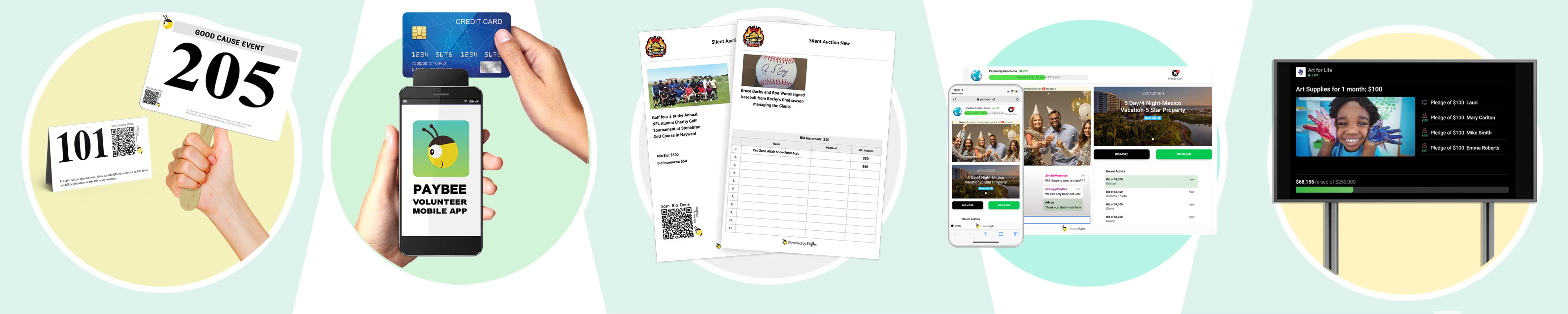
Paybee is the leader in nonprofit fundraising events with tools for virtual, hybrid and in-person events.