


Individual Fundraising Ideas for Sports: Exciting Ways Athletes Can Raise Money
TL;DR
Every athlete wants to become the “MVP” of their sport, competing at the highest possible level, but funding your dreams can get very expensive, incredibly fast. The closer you get to greatness, the more bills there are to pay for, covering everything from travel, to equipment, and maybe even coaching.
Individual fundraising ideas for sports can help you finance those expenses in different ways, and there are lots of fun ways to get started, whether you’re running a mini raffle, a crowdfunding campaign, offering lessons, or just washing cars.
Here’s how you can get your community rallying behind you, not just cheering you on.
The Importance of Fundraising for Individual Athletes
Sometimes, athletes are lucky. They might get support from an educational institution, or a sponsor to help them pay for the next stage of their career. Most would-be superstars, though, end up having to find the cash themselves, or end up turning to friends and family for help.
There are a lot of fees to consider, from travel and registration fees, to equipment and gear, training and coaching, medical or physical care, even living expenses.
Even if you’re still young, the costs add up fast. One study from the Aspen Institute found parents in America spent an average of $1,016 on a child’s primary sport in 2024.
Fundraising ideas give you a way to tap into the financial support of a community already cheering you on. You don’t necessarily need to host a giant gala, or spend weeks gathering donations for a raffle. Some of the best fundraising ideas for individual athletes are incredibly simple, they might cost nothing but your time, and a little creative brainpower.
The best thing you can do is start with an estimate of how much you want to raise, then work backward. Figure out what you’re good at, what you have time to do (in between training sessions or competitions), who can help you along the way, and what tools are available to make the process a little bit easier.
Should You Fundraise as an Individual Athlete or Through Your Team?
Before we start exploring some brilliant individual fundraising ideas for sports champions, there’s a valuable question to ask. Should you be doing this solo, or getting your team involved?
Imagine you need $2,300 to travel for a gymnastics competition, if you’re the only person competing, then you probably don’t have much of a team behind you for extra support. Maybe your coach can help and your fellow gymnast friends, but that’s about it.
On the other hand, if your whole basketball team is raising money for an upcoming competition, it makes more sense to get everyone involved.
Going it alone doesn’t have to be a bad thing. An individual athlete can still ask relatives for help, pitch local companies for sponsorships, run personal crowdfunding campaigns or sell some coaching sessions. A team might have more connections, and more time to give, but there’s also more people to coordinate.
Here, we’re focusing on individual fundraising ideas for sports, so we’re going to be assuming that you’re going it alone, but if you do have a team behind you, there are plenty of great fundraising ideas for small groups out there that can help you make the most of the extra assistance.
Step One: Building Your Unique Athlete Story
Don’t worry about luxury raffle prizes or fun runs first. The first thing you’re going to need is a story that really drives people to support you. Any athlete can post a message on social media asking their friends to “help them get to their next competition,” and some might actually get a bit of support.
Still, if you want to reach your goals faster, you need a story that travels further than your current social circle. Ask yourself, what got you to this point?
How many years have you spent training? Make notes about the long nights you put in even when you were exhausted and just wanted to go home and rest. What have you sacrificed to make it this far, and what have you learned from your wins and losses?
Start the story with that, give yourself a background people can fall in love with. Then, explain why you’re asking for help right now.
Maybe this is the first time you really need to spend real money to go further in your journey. You just qualified for a national swimming competition, and you’ve been told it’s going to cost $2,375 for travel, accommodation, plus registration.
Maybe you’ve been funding yourself until this point, but you’ve run out of resources, and you parents, friends, or even the college campus doesn’t have enough money to give you.
Explain all that, and also explain what happens when you get the backing you need. Will this take you to your next competition, get you global recognition, or even earn you a sponsor?
Back it up with photos of your training sessions, screenshots of the congratulations email inviting you to the event, maybe even a bit of extra information about the competition.
The Power of Storytelling in Engaging Donors
Stories are incredibly powerful for fundraising, because they help your potential backers see where you’ve been, step into your shoes, feel your need, and understand what they can really do to change your life for the better.
You don’t need to tell your life story, or make up an excuse for why people should feel sorry for yourself. Be honest and authentic, that’ll take you much further.
Also remember the story you tell will need to stay consistent across platforms, but it still needs to be tweaked. People don’t have time to read a huge multi-paragraph essay on social media. Give them the basics, then direct them to your fundraising page or crowdfunding link if they want to learn more.
Then, keep adding to the story. Share updates along your journey with videos, thank-you messages for early supporters, insights from your friends and family, maybe even a behind the scenes look at how you’re preparing for the big event. That’s how you keep people involved along the way.
Step Two: Setting Clear Goals for Your Fundraising Strategy
Every fundraising effort depends on a clear set of goals. The first goal you set is going to be the overall “financial” target. For instance: $2,250 to reach the national competition. It can help to break that down for potential supporters, for instance:
Explain what you’ve already paid for, and where those costs come from. Sometimes it’s useful to show your possible backers why the hotel costs $700 (maybe it’s the closest one to the venue, or where the in-between team meeting sessions are going to be held). That stops people from jumping into a mission to find you a cheaper deal.
Setting Short-Term and Long-Term Goals
Once you know the total amount you need to raise, break it down into milestones.
For example, you might need to get the first $250 in the next twenty days to ensure you’re actually on the list for the event. Tell your would-be donors if there’s a deadline to get that money sent over. Maybe you need the equipment and coaching earlier than you need to pay for the travel and hotel, so you can start preparing properly.
A really fun way to keep track of everything (and help your donors see progress too), is to use a fundraising thermometer. Mark it with things like “paid for entry” or “covered the training”, so everyone can see immediately how far you’ve come and what you’ve got left to handle.
Keep that updated, too. People start to panic if they send their donations, but don’t see the progress bar moving for weeks.
Step Three: Picking Individual Fundraising Ideas for Sports
This is the point where you can start having some fun and letting your creative side shine through. For an individual athlete, a few ideas probably deserve to be written off straight away. You probably don’t have the resources to run a gala, but there are plenty of other options to consider.
Shortlist ideas based on how much effort, time, and money they’re going to cost, what resources you actually have (your skills count, too), and how long you have to reach your goal.
Online Crowdfunding or Peer-to-Peer Campaigns
Crowdfunding is one of the quickest, and easiest ways for individual athletes to start raising money. You can get a page live in a matter of minutes, share it with everyone you know on social media, as well as your friends and family, and start earning cash immediately.
One quick thing to keep in mind is there is a bit of a difference between crowdfunding and the basic peer-to-peer campaigns you might run on something like GoFundMe.
With crowdfunding, you’re driving traffic to a single campaign page, asking people everywhere for support. With peer-to-peer fundraising, there are usually more people involved. For instance, if your swim team is made up of fourteen people but only you made it to the next competition, you still might get the other fourteen swimmers to create and share their own pages.
With both strategies, you can either just ask for help (explaining your story and what your need), or offer people rewards, like a signed picture, a personal thank-you video, or even tickets to your next competition. The most important thing is generating excitement, and visuals are great for that.
The more you can pack your personal fundraising page (plus your social media channels) with raining videos, action shots, and updates to your fundraising thermometer, the more engaged people will be.
Direct Requests for Donations
As uncomfortable as it can be to go out and ask someone for money, it’s one of the easier ways to start raising funds for your sporting future. It helps, usually, to start with people who already know you and your background. That includes your family members, former and existing coaches, neighbors who always see you practicing, plus teachers or team mates.
The most important thing is making the request feel personal. You should be referencing the relationship you’ve already built with that person. Tell your old coach how they helped you reach this point, and how grateful you’d be if they were involved in your next step. Tell your neighbors how much you appreciated them coming to your local football games, and promise them a free signed ticket to the next one they can attend.
Also remember to give them another way to help outside of donating. Some people will genuinely want to get behind you, but they might not have the budget. If that’s the case, they might know a business that sponsors local athletes, or people at work that would be happy to donate items for a raffle. Maybe they’d just be willing to talk about you on social media and share your donation link.
There are plenty of ways you can get in touch, too. You might hand-write a letter, you may visit someone in person, or you might just send a text, email, or social media DM.
Sponsorships, Business Partnerships, and Brand Ambassadors
Businesses are often thrilled to get involved with sponsorship and partnership opportunities, as long as they’re getting something useful back.
As tempting as it might be to start emailing your favorite sportswear companies straight away, I’d start a little smaller when searching for sponsorships. A good option is to talk to the owner of the gym that you train in, or speak to your local physical therapist. Maybe there’s a restaurant you know that already supports a couple of teams in town.
Sponsors will still care about your personal story, but they’ll probably be looking for more detail, too. Exactly how much do they need to donate, and what does that give them? If they give you $250 towards travel and entry fees, does that mean you’ll add their logo to your uniform, or just mention them on social media?
A good option is to give people tiers. For instance, $100 might earn a tag on Instagram and a public thank-you. A $500 check and a donated gift might get them their logo on your jersey for the event itself, and a speech at their next celebration. You could even sweeten the deal by offering to sign some of their branded merchandise if they’re planning on running a fundraiser or auction themselves.
Or you could run an event alongside the business, maybe a gym can host a paid class run by you, or a coffee shop could offer a special “themed” drink in your honor.
Athletic Challenges and Events
Challenges make for fun and exciting fundraising events, and they’re also a great way to connect with new people and earn social followers (if you need them). If you’re a swimmer, you could ask supporters to pledge $1 per lap during a one-hour swim, and see how far you can go. If you’re a basketball player, you could take 200 free throws and collect pledges for every time you dunk.
A really great way to improve your reach here is to go beyond letting people come and view you in-person. Livestream the whole thing on a virtual platform. Promote the event in advance with social media, and maybe even challenge people to guess exactly what you’re going to achieve for a chance to win a prize.
Also, make sure to gather plenty of content you can share from the challenge itself, cut up your livestream with videos of your “best shot” or the moment you reached a specific fundraising milestone that you can share with your followers.
You could also take a different approach and get the whole community involved in a challenge. Partner with a local gym or community sports group, and get them to set up an obstacle course, a fun run, or a walk-a-thon where everyone can compete for the top leaderboard position.
Sports Clinics, Private Coaching, and Training Sessions
Obviously, you do need to be good enough to actually teach others to run sessions like these, but coaching opportunities can be some of the absolute best individual fundraising ideas for sports. If you’re skilled enough to make it to a championship event, you’ve probably got something you can share with other would-be athletes.
There are plenty of ways you can run these sessions. You might offer group lessons on goal-keeping, personal one-to-one workshops that tell people how you stay disciplined, or even run a series of events for local youth sports clubs.
The pricing doesn’t have to be huge. If you invite fifteen people to take part in an event and each ticket costs $20 each, that’s $300 before expenses, potentially just for one afternoon of your time. The big thing here is promotion. Market your lessons as limited once-in-a-lifetime opportunities with a real offer at the end, like “learn how to shoot the perfect goal in one afternoon.”
Host a Small Sports Tournament or Pay-to-Play Event
This is a fun strategy if you want to take advantage of the natural love people tend to have for competition, just keep it playful, not aggressive. Think carefully about who you can picture showing up to a tournament first. It might be younger athletes from local sports clubs, friends and colleagues, or even people dreaming of one day becoming a sports superstar themselves.
You probably don’t want people trying to prove they’re better than you at these events, so pick something simple where everyone can compete on even footing. It might be a free-throw contest at a school gym, pickleball, a penalty shoot-out or even just a sports trivia quiz.
If you make the tournament into a whole day, you can even end up earning extra money alongside the price for entry. A local sponsor might be willing to cover the venue, while parents from your school manage snacks and drinks. Someone else in your community might donate prizes or run a raffle.
Keep it light-hearted and playful, and remember to thank everyone for getting involved (even the people who end up at the bottom of the leaderboard).
Product and Merchandise Fundraisers
Product and merchandise fundraisers can be a little trickier because you have to actually create something people want to buy. These days though, it’s quite a bit cheaper (and easier) than it used to be, thanks to print-on-demand companies and similar solutions.
You might start with products you already have, like old uniforms, tickets, or equipment you’re willing to sign and give away. Then maybe make a few branded mugs, shirts, calendars, water bottles, or even stickers. You can set up an online store on something like Shopify, sell your merch in person, or just offer them over social media selling pages.
Another option is to make something simple at home. Cookie dough, candy bars, popcorn, and plenty of other food-based items are great, especially if you’re running a local event like a bake-sale. You can even ask other members of the community to help make things.
Just be careful with planning your margins. If you’re using a catalog company, check if the fundraising catalog includes samples or a sample kit (so you can check the quality before spending too much). If you’re selling food or items made by other people, make sure you know whether you’re expecting you to pay for their time.
Service Fundraisers, Car Washes, and “Hire an Athlete”
Service-based fundraising ideas are brilliant because they don’t ask for much beyond your time, and maybe a bit of skill. The standard car wash is a brilliant example, especially if you can get team members or friends to help you out. Still, it always helps to think about what people in your community need right now.
They might need help with dog walking or babysitting year-round. At the end of the year they might be looking for help wrapping gifts, and in summer or spring they might prefer your assistance with yard work. You can also look at other things, like cleaning sports equipment at the gym or youth club, setting up resources for a local event, or helping kids with physical education homework.
Be careful about what you charge, too. Charging $5 to wash a car is fine, but it won’t add up to much fast if you’re on your own.
Sneaker Drives, Gear Sales, and Community Yard Sales
All families accumulate things over time, families that include sports enthusiasts tend to collect even more. There are probably dozens of parents in your community with boxes full of old equipment that only got used once, or clothing that ended up being too small before the season started.
Ask around on local social or community groups and ask if anyone would be willing to donate. You can collect everything from footballs, to hockey sticks, sneakers, maybe even memorabilia that you can put aside for a live or silent auction.
Clean everything you get, make sure it doesn’t have any major issues, then price it fairly. After that, you can choose where you want to sell it. It might just be a yard sale, or you might decide to list things online. If you are selling anything online, be careful about delivery expectations.
You might not have a problem dropping a pair of cleats off at a neighbor’s house, but if someone from the next city over wants to order a tennis racket, there’s a lot more postage involved.
Raffles, Silent Auctions, and Live Auctions
Raffles, silent auctions, and live auctions are definitely easier to run when you have a team behind you, but they’re not impossible if you’re looking at individual fundraising ideas for sports.
Plenty of people in your community, from businesses, to neighbors, might be willing to donate things that supporters might be excited to bid on. You might even have your own collection of sports memorabilia that you’d be willing to put up for auction.
A good way to expand your catalog is to start asking around early. Check with local businesses if they’d be willing to donate things like a free meal at a restaurant, or a one month subscription to a gym. Then make sure you have the tech you need to run everything.
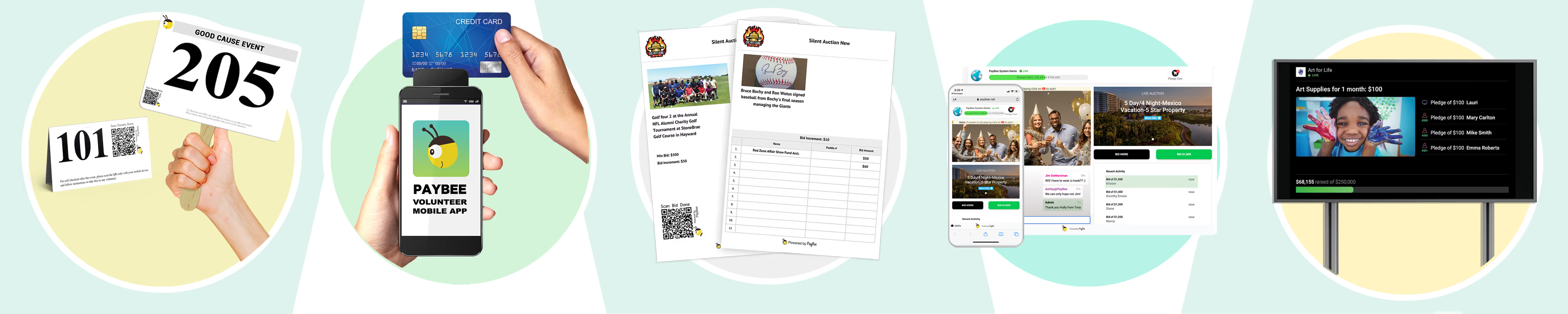
Tools like Paybee can give you auction features that let you run the whole event either in-person or online, keep track of bids, and make sure the right people get their winnings.
How Can Athletes Promote Their Fundraiser?
There are a few brilliant ways you can get people excited about your fundraising strategy. Sometimes the community members and businesses you partner with will do some of the work for you. That doesn’t mean you should just sit back and relax.
Get Creative with Social Media
Social media is the obvious place to get started, no matter what your individual fundraising ideas for sports might look like. You’ve probably got plenty of content you’ve captured on your phone already that you can share to get attention, like training clips or competition footage.
Think about how you can use that in a way that ties into your fundraising goal. For instance, you might share a photo collage of your recent achievements with your initial “fundraising request” ask and link, then plan for a selection of progress posts, from video updates, to messages from sponsors.
Have a little fun here. You could:
- Run social media challenges to get more people sharing your initial post, or start driving attention towards a hashtag you’ve chosen for your campaign.
- Create montage videos on TikTok showing your training regime, with scores or results explaining what you achieved at the end.
- Live stream practice sessions or events you’re attending on Instagram or YouTube.
- Get your team involved and ask them to share their own experiences or stories with you and promote it on your channel.
- Time-based posts with countdowns when you’re coming closer to the deadlines for certain milestones in your fundraising efforts.
- Host polls or contests getting people to guess what kind of results you’re going to get in your next competition or event.
Regularity is important. GoFundMe says every new way someone shares a campaign can increase your visibility by two and a half times. That doesn’t mean you have to post three times a day, but don’t disappear for weeks at a time.
Use Email and Direct Messaging
Email can sometimes get overlooked by people looking for strategies for boosting fundraising for individual athletes, because it’s generally a lot slower than social media. Still, it can definitely be helpful. You could set up your own email newsletter that people get access to when they send a donation, and share weekly updates on how you’re progressing towards your goal.
There are plenty of tools like Mailchimp to help you do that, and you’d be surprised how little effort it takes to send just a message or two every week. Definitely make sure you’re segmenting your audience here, though. The updates your biggest fans want to see probably won’t be the same as the ones sponsors and local businesses expect.
Remember direct messages too, they’re particularly good if you’re just quickly thanking people for their support on social media. They’re also helpful if you want to quickly keep everyone up-to-date on when deadlines are approaching.
Promote in the Real World, Too
Not all of your promotion has to happen online. Some of the best individual fundraising ideas for sports actually do a lot better with in-person promotion. If you’re running a coaching session for a youth club, for instance, you might ask the club to show a poster on it’s wall with a QR code linking to your fundraising page.
If you’ve got sponsors or partners, they might be willing to share something similar. You could pin things up on local notice boards, or coffee shops, or ask someone to mention you on a school email, workplace newsletter, or community newspaper.
Make sure everyone who hears about you knows there are multiple ways they can get involved, whether that’s just sharing your link, giving a direct donation, or contributing a raffle prize.
Keeping Supporters Engaged and Involved
Promotion is all about attracting attention, but you need to keep it, too. The first way to make sure you can do that effectively is to keep careful track of your own progress. Fundraising apps for sports teams can help with that, giving you an idea of how much you’ve earned, where the biggest support boosts are coming from, and sometimes even the average donation size.
When you get those details, use them to plan what the next stage of your campaign should be, that might be more posting on social media, or it could be just quickly updating your fundraising thermometer. Sometimes you’ll need to send a reminder to a sponsor or supporter too, or you might just need to send a quick thank-you note.
Making the Thank-You Personal
Just like the requests you make for funds need to be personal and relevant, the gratitude you show should feel personalized too. First, think about where they’re most likely to see the “thank you”, you might just have a list of names on your crowdfunding page, or you might want to send everyone an individual message. If someone really gave you a lot of time or money, you might want to go further.
A personalized video message for someone who gave you $300 towards your goal might make them feel more appreciated, and it may encourage them to share your cause with more of their community.
Next, make sure you’re clear about what you’re thanking them for. Mention the amount they donated, if relevant, and what it helped to fund.
Keep People Updated After the Goal Is Hit
Once you actually reach your ultimate goal, keep people updated. Don’t just say “Thanks guys! We did it!”, let them know what happens next.
Send supporters the details about the competition result, show them around the hotel the fundraiser helped pay for, or take a photo of the venue with other competitors in the shot. Post a couple of videos on your journey, and share anything exciting that happened next, like you getting recognized by a talent scout.
Some people may even decide to follow your journey for longer, which means you start building a fanbase early, and you have potential donors to come back to if you need extra help down the road.
Give Supporters Somewhere to Stay
Another great way to boost donor retention, and make sure you have plenty of support for the future is to create your own mini community. It doesn’t have to be anything massive. You might just create a social media page where you share regular training updates during the season, or give supporters access to a live-stream or Q&A session once a month.
You could even give recurring donators or supports access to something extra special, like early news when you qualify for something new, early-bird prices on tickets, or future sponsorship opportunities if you’re trying to attract business support.
Tips To Raise More Money From an Individual Sports Fundraiser
A few final tips if you’re trying to really increase your fundraising potential fast.
- Offer more than one way to contribute: Some people genuinely want to get behind you, but they won’t have spare funds. Make sure they know other ways they can get involved, even if that’s just helping to share your posts on social media.
- Provide different donation options: Some of your supporters will be willing to send a small amount to a crowdfunding page straight away. Others might prefer to pay for a raffle ticket. Businesses might want different sponsorship tiers to choose from.
- Pre-sell before you spend: If you’re going to be offering custom merch, selling your time as a coach, or running a tournament, check if people are interested first. Run a poll and see how many people actually want to get involved.
- Use gamification to your advantage: Sports is naturally competitive, so games are always a great way to increase interest. You could have a leaderboard for your best supporters, or challenges where donors can sponsor specific objectives.
- Keep everyone in the loop: Don’t just thank your biggest supporters and ignore everyone else. Keep everyone in your community updated, and make sure everyone feels appreciated, even if they donated time, or their reach instead of money.
- Have an extra idea in reserve: A raffle might earn you all the money you need straight away, or you might end up struggling. Have something you can fall back on, whether that’s a crowdfunding campaign or a silent online auction.
Get Started with the Best Individual Fundraising Ideas for Sports
The best individual fundraising ideas for sports don’t have to be complicated or expensive. The chances are you already have a community out there that’s willing to back you, and knows just how dedicated you are to your dreams.
All you really need to activate that support is a story that people can get behind, a few good ideas for generating money, and the commitment to keeping your backers engaged every step of the way.
Who knows? The energy you put in now could help to fund multiple stages of your sporting career, or even help your entire team raise funds for future equipment and resources.
Now you’ve got the ideas and the strategy, the next step is deciding what will help you run your campaigns more effectively. A fundraising platform like PayBee can really help here, giving you the resources you need to manage, plan, and make the most of every event. Get your demo here.
FAQs
What are the best individual fundraising ideas for sports?
If you’re raising money on your own, the best fundraising ideas are the ones you can manage individually, without spending too much money and energy upfront. Crowdfunding and peer-to-peer campaigns are great, so are service-based fundraising ideas, coaching sessions, or even raffles and auctions if you have a little outside support.
How can individual athletes raise money quickly?
If you’ve got a deadline approaching fast, make sure your supporters are aware of it. Explain when you need the money, why, and what people can do to help you quickly, and book any events in advance. If there’s a skill to sell, for instance, you might need to plan a weekend in a local gym weeks before your fund deadline is due.
What’s the difference between fundraising for individual athletes and team fundraising?
Really just the number of people the fundraising effort is focused on. Fundraising for individual athletes is about raising money for one person, while team fundraising concentrates on a group. Even if you’re fundraising for just you, it’s still possible to get friends, peers, mentors, coaches, teachers and other people involved.
Can student athletes get sponsorships from local businesses?
Definitely, and plenty of local companies will be happy to share their financial support and resources, provided they’re getting something in return. That might mean that you add their logo to your uniform, talk about them on social media, or just give them a public thank you.
Are donations to an individual athlete tax deductible?
That depends on where you’re located. A gift made directly to one person isn’t always considered a charitable expense. However, there are cases where a business donating funds to an athlete might be able to classed as a marketing or advertising expense.
Start Fundraising
 Paybee
Paybee is the leader in nonprofit fundraising events with tools for virtual, hybrid and in-person events.